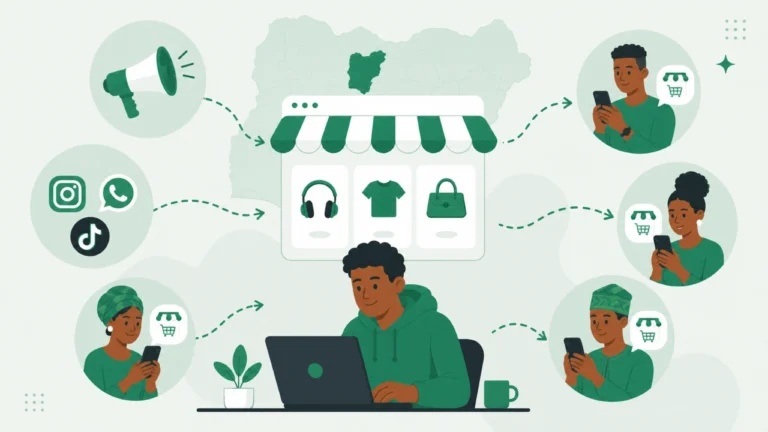


Chidinma sells skincare from her flat in Surulere. For two years, her entire business lived on Instagram and WhatsApp: screenshots for a catalogue, DMs for orders, bank transfer for payment. It worked until it didn’t. Customers asked for a “real store link” before they’d pay. Orders got lost between three different chats. She had no idea which product was actually making her money.
Her problem wasn’t her products. It was that she never picked the best online store builder for how she actually sells. This guide compares the platforms Nigerian sellers use most, from global tools like Shopify and WooCommerce to mobile-first Nigerian tools like Bumpa and Catlog, so you can see which one fits your business stage, budget, and the channels your customers already buy from, before you commit to one.
What Makes the Best Online Store Builder for Nigerian Sellers?

Not every ecommerce platform was built with Nigeria in mind, and that shows up fast once you’re running one. A store builder that works well here needs to handle a few local realities: naira pricing, Paystack or Flutterwave as payment rails, patchy mobile data, and customers who still expect to close a sale on WhatsApp or Instagram rather than a checkout page alone.
At minimum, look for a platform that lets you:
- Accept card, bank transfer, and cash-on-delivery payments
- Sell directly through WhatsApp, Instagram, and TikTok, not just a standalone website
- Set up without needing a developer or foreign currency
- Track orders, inventory, and customer messages in one place
- Load quickly on average Nigerian mobile data speeds
Nigeria had 107 million internet users as of January 2025, putting internet penetration at 45.4 percent of the population, and the overwhelming majority of that access happens through a phone, not a desktop. A store builder that isn’t mobile-first is already fighting the market it’s meant to serve.
Which Online Store Builders Are Nigerian Sellers Actually Comparing?
Most sellers narrow their search down to a handful of names. Here’s how the commonly compared platforms stack up.
Shopify. A global standard with strong design flexibility and app support. The catch for Nigerian merchants is that Shopify Payments isn’t available locally, so sellers have to connect a third-party gateway separately, and the monthly subscription is billed in dollars, which adds currency risk for naira-earning businesses.
WooCommerce. Free to install as a WordPress plugin and highly customizable, but it needs hosting, a domain, and someone comfortable maintaining a WordPress site. It’s a strong option if you already have technical support, less so if you want to launch this week.
Bumpa. A mobile app built for Nigerian vendors who want to set up quickly and manage sales from their phone. It handles basic storefronts and payments well but offers less room to grow once a business needs deeper inventory or multi-channel tools.
Catlog. Lightweight catalogue and link-in-bio style tools, popular with WhatsApp and Instagram sellers who need a shareable product page rather than a full backend.
Shopinbos. Built specifically around how Nigerian sellers already operate: social-first, mobile-first, and payment-flexible. Rex, the platform’s AI store builder, turns a single product description into a live storefront in about 90 seconds, and Peggy AI handles restocking alerts and customer replies once the store is running. Shopinbos also brings WhatsApp, Instagram, and TikTok into one inbox, supports Paystack, bank transfer, cash-on-delivery, and wallet payments, and includes a sourcing marketplace for sellers who need verified suppliers rather than building products from scratch.
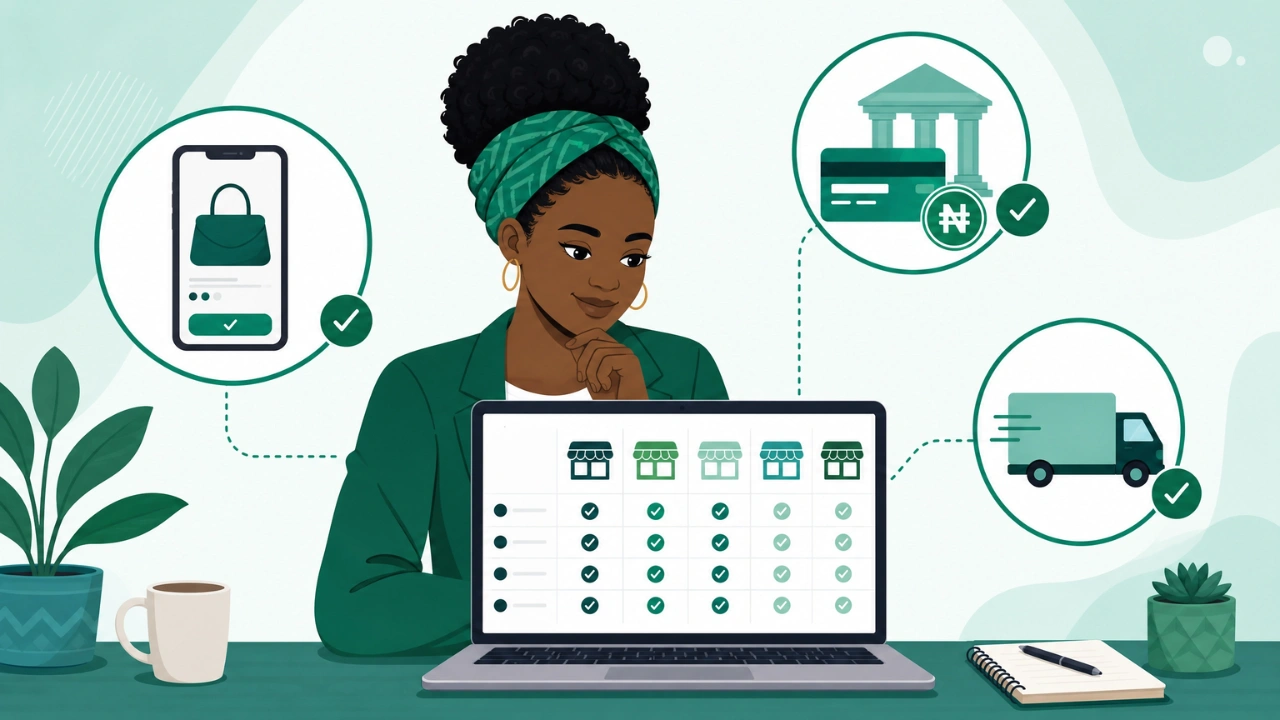
Shopify vs Bumpa vs Shopinbos: How Do They Compare?
| Feature | Shopify | Bumpa | WooCommerce | Shopinbos |
| Setup speed | Moderate | Fast | Slow (needs hosting) | Fast (AI-built in ~90 seconds) |
| Local payments | Needs third-party gateway | Yes | Needs plugin setup | Paystack, bank transfer, COD, wallet |
| Social selling (WhatsApp/IG/TikTok) | Limited | Basic | Needs plugins | Built in, one inbox |
| Pricing currency | USD | Naira | Free plugin, paid hosting | Naira |
| Best for | Established brands wanting full design control | Solo vendors starting out | Technical users wanting full customization | Sellers who sell across social and want it managed in one place |
How Do You Drive Traffic to Your Online Store Once It’s Live?

Picking a platform is only the first half of the job. A store with no visitors won’t sell, no matter how good the builder is. Once your store is set up, focus on the channels that already bring Nigerian buyers online:
- Post where your customers already scroll. Instagram and TikTok are where most Nigerian ecommerce discovery happens. Share product videos, not just static photos.
- Add your store link to WhatsApp Status and your bio. Many buyers are one tap away from checking out if the link is visible.
- Ask for reviews and share them. Social proof closes hesitant buyers faster than another discount would.
- Use SEO on your store’s product pages. Clear titles and descriptions help Google surface your products for people already searching for them.
- Run small, targeted ads once you know what sells. Facebook and Instagram ads let you target by location and interest without a large budget.
Consistency matters more than any single tactic. According to the Federal Trade Commission’s guidance on ecommerce disclosures, businesses that communicate policies clearly and consistently build stronger buyer confidence, which in turn improves how well paid and organic traffic actually converts once it lands on your store.
What Should You Look for Before Choosing an Online Store Builder?
Before committing, weigh these factors against your own business stage rather than the platform’s marketing:
- Cost structure. Check monthly fees, transaction charges, and whether pricing is in naira or a foreign currency.
- Payment support. Confirm the platform works with Paystack, Flutterwave, or your preferred local gateway without extra setup.
- Channel reach. If most of your sales already come from WhatsApp or Instagram, a builder that connects those channels natively saves you from juggling separate tools.
- Room to grow. A tool that’s easy now but has no upgrade path will slow you down once orders increase.
- Support quality. Look for responsive local support rather than a generic help desk in a different time zone.
What Mistakes Do Nigerian Sellers Make When Picking a Store Builder?
A few patterns show up again and again:
- Choosing a platform based on price alone, then discovering it can’t handle local payments properly
- Building a store that’s disconnected from WhatsApp and Instagram, where most orders actually start
- Ignoring mobile page speed, which quietly costs sales on slower data connections
- Skipping supplier verification and ending up with inconsistent stock
Avoiding these early saves far more time than fixing them after launch.
Frequently Asked Questions
For sellers who want to launch fast without technical setup, mobile-first tools like Bumpa, Catlog, or Shopinbos tend to work better than global platforms like Shopify or WooCommerce, which need more setup or ongoing maintenance.
A dedicated store link still helps. It gives buyers a professional checkout experience, makes it easier to track orders, and works as a single link you can share across every channel.
Costs vary widely. Some tools offer free plans to start, while others charge monthly subscriptions in naira or dollars plus transaction fees. Compare total cost, not just the advertised starting price.
Conclusion
There’s no single best online store builder for every Nigerian seller. Someone with a WordPress developer on standby will get more out of WooCommerce than a solo Instagram seller ever would.
What matters is matching the platform to how your customers already buy, whether that’s a full website, a shareable catalogue, or a store built around WhatsApp and Instagram from day one. Shopinbos was built for that last group specifically, so if your sales already move through social chats, it’s worth trying Rex to see your storefront live in under two minutes.
Ready to grow your own shop?
Shopinbos is free to start. Rex builds your storefront in 90 seconds, Peggy handles the rest.
Get early access