
Nine times out of ten, payment failure issues are not the customer’s card or their bank. It is the payment gateway. Choosing the wrong one does not just cost you a transaction, it costs you a customer, and sometimes the reputation you spent months building.
After successfully crossing the most daunting hurdle of picking a product niche, and setting up your store, you probably thought now is the time to sit back and relax but no, now’s in fact the time to stay awake and alert, because by the time your marketing strategies start bringing customers in, you don’t want to lose those customers at the critical point of your whole store called “check out”, simply because payment failed.
This guide explores the payment gateway in Nigeria for online stores in 2026, so you can pick one that actually works for how business is done here.
What to Look For in a Payment Gateway
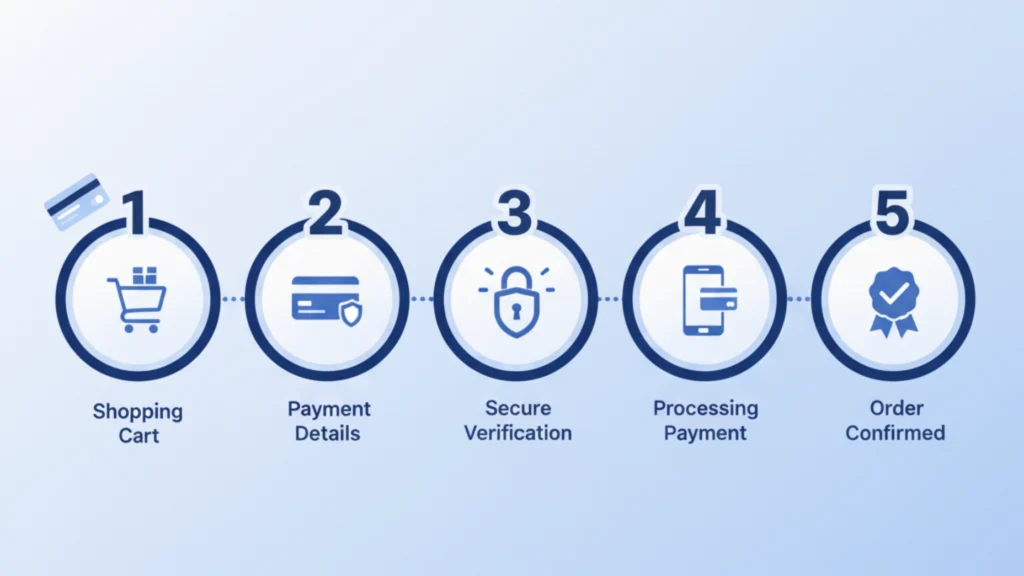
Before we dive into specific providers, let’s outline what makes a payment gateway a good fit for a budding entrepreneur. The best payment gateway for small business will strike a balance between cost, simplicity, and security.
Key factors to consider:
- Transaction Fees: This is usually a percentage + a fixed fee for each sale. This is your most important cost.
- Monthly Fees: Some charge a monthly subscription; others don’t.
- Setup & Integration: How easy is it to connect to your website (like Shopify, WooCommerce, etc.)?
- Contract Terms: Avoid long-term contracts when you’re just starting.
- Security & Fraud Prevention: Built-in tools are non-negotiable for protecting your revenue.
Top Payment Gateways in Nigeria for Online Stores
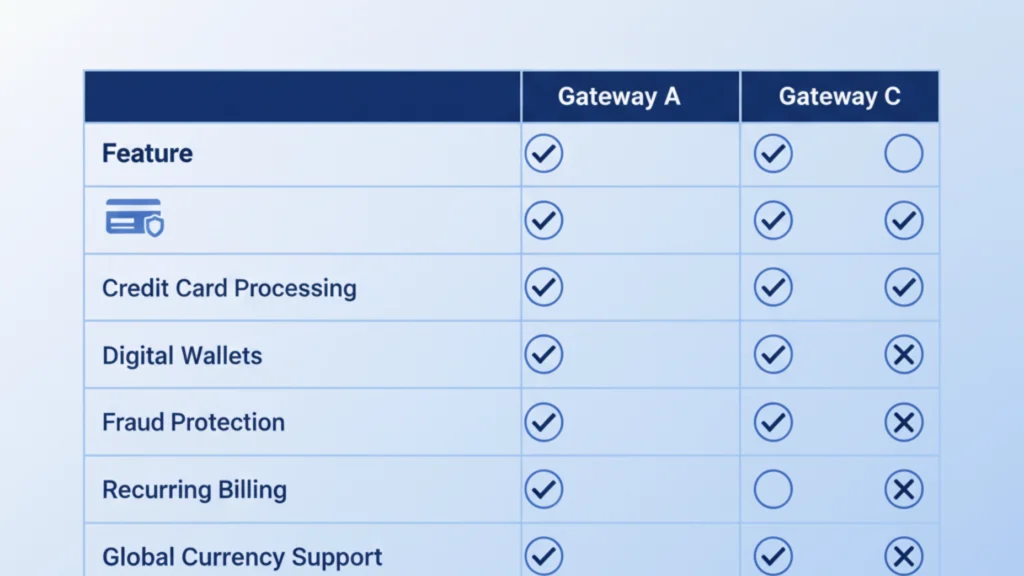
Here’s a straightforward comparison of some of the most popular and beginner-friendly payment gateways in Nigeria.
1. Paystack — Best for Small Stores and Beginners
Paystack remains the most widely used payment gateway in Nigeria among SMEs, and for good reason. It has a clean dashboard, official plugins for WooCommerce, Shopify, Wix, and Shopinbos and transparent pricing with no setup fee.
Fees:
- Local transactions: 1.5% + ₦100 (₦100 waived for transactions under ₦2,500, capped at ₦2,000)
- International cards: 3.9% + ₦100
Settlement: Next business day (T+1)
Payment methods: Cards, bank transfer, USSD, Visa QR, Apple Pay, mobile money
Best for:New online stores, WooCommerce, Shopify or Shopinbos setups, sellers who want a simple and proven solution
One thing to know: Paystack is strict with dropshipping businesses and high-risk product categories during account review. If that applies to you, confirm your business type is supported before building your checkout around it.
2. Flutterwave — Best for Sellers Going Cross-Border
Flutterwave powers payments across 12 African countries and supports over 30 currencies. If you sell to customers outside Nigeria or plan to, Flutterwave gives you the international reach Paystack does not fully match.
Fees:
- Local transactions: 1.4% + 0.6% platform fee (total 2%, per transaction)
- International cards: 4.8% per transaction
Settlement: T+1 by default; instant settlement available for a fee
Payment methods: Debit and credit cards, bank transfer, USSD, mobile money, bank account, POS, VISA QR, M-Pesa,
Best for: Stores targeting diaspora customers, sellers with pan-African ambitions, businesses that need multi-currency support.
One thing to know: Flutterwave recently acquired a full banking licence in Nigeria, which means settlements will no longer pass through a partner bank. This should speed up payouts and reduce the middleman friction merchants have complained about for years.
3. Monnify (by Moniepoint) — Best for Transfer-Heavy Stores
If most of your customers pay via bank transfer, which is the dominant payment method in Nigeria right now, then Monnify deserves serious consideration. It specialises in virtual account payments, which means every customer gets a unique account number to transfer to, and reconciliation is handled automatically.
Fees:
- Account transfers: 1.5% (or 500 flat rate) per transaction (capped at ₦2,000)
- Cards: 1.5% per transaction
Settlement: Twice daily for transactions done with account transfers (including weekends and public holidays), while for card transactions settlements occur the next day (excluding weekends and public holidays).
Payment methods: USSD, Mobile and internet transfer, bank transfer, virtual accounts
Best for: Stores with high-ticket orders, businesses that do a lot of bank transfer volume, online sellers who hate manual reconciliation
One thing to know: Monnify is Nigeria-only. If you have international customers, you will need a second payment gateway.
4. OPay Checkout — Best for High-Volume Small Sellers
OPay started as a consumer wallet but has grown into a serious checkout option, especially for sellers who already have customers on the OPay ecosystem. With over 40 million registered Nigerian users, the OPay wallet is a payment channel you cannot afford to ignore.
Fees
- Standard: 2.25% + 2 EGP
- Custom: Customized design for your business
Settlement: Instant to OPay Business account; T+1 to other banks
Payment methods: Cards, bank transfer, USSD, QR code, OPay wallet
Best for: Sellers targeting the mass market, food and lifestyle businesses, online stores that want instant settlement to an OPay account
One thing to know: OPay’s dedicated gateway is newer than Paystack or Flutterwave, so enterprise-level features like split payments are still catching up.
5. Korapay (Kora) — Best for Pan-African Growth
Kora is built for businesses that sell across multiple African countries. If you’re targeting customers in Ghana, Kenya, Egypt, Ivory Coast, Cameroon or South Africa in addition to Nigeria, Kora handles the complexity of local payment methods in each market through one integration.
Fees:
- Local payments: 0.5% – 2.5% per transaction
- International cards: Variable by currency
Settlement: bank transfers offer instant settlement, while card payments typically take 12 to 24 hours. Multi-currency settlement is also available.
Payment methods: Cards, bank transfer, USSD, mobile money, virtual accounts
Best for: Stores expanding beyond Nigeria, businesses that need USD settlement
Choosing the right payment processor is just one piece of the eCommerce puzzle. To build a truly resilient business, you need a solid foundation. Our guide on how to start a free online store will help you minimize costs and maximize profits from day one.
Payment Gateway Fees in Nigeria — Quick Comparison
| Gateway | Local Fee | International Fee | Settlement | Setup Fee |
| Paystack | 1.5% + ₦100 | 3.9% + ₦100 | T+1 | Free |
| Flutterwave | 2% (capped ₦2,000) | 4.8% | T+1 / Instant | Free |
| Monnify | 1.5% (capped ₦2,000) | N/A | Daily / Instant | Free |
| OPay | 2.25% + 2 EGP | Limited | Instant / T+1 | Free |
| Korapay | 0.5 – 2.5% | Variable | T+1 | Free |
How to Collect Payments Without a Website
This is one of the most asked questions by Nigerian online sellers, and the answer is simpler than most people think. Both Paystack and Flutterwave let you generate a payment link, that is, a URL you can share via WhatsApp, Instagram DM, or SMS and customers pay through it without ever visiting your website.
To set one up on Paystack: create a free account → go to Payment Pages → create a new payment page or one-time link → share the link with your customer.
This works on your phone, takes about five minutes, and costs nothing to set up. For WhatsApp-based selling, this is the single most important tool in your payment stack.ore of our beginner-friendly resources today!
How to Integrate a Payment Gateway on Your Online Store
For WooCommerce: Both Paystack and Flutterwave have free official plugins in the WordPress plugin directory. Install the plugin, enter your API keys from your dashboard, and you’re live. The whole process takes under 20 minutes.
For Shopify: Paystack has an official Shopify app. Install it from the Shopify App Store, connect your Paystack account, and enable it as a payment method. Note that Shopify charges an extra 0.5–2% transaction fee on top of Paystack’s fee unless you’re on Shopify’s own payment system, which is not available in Nigeria.
For Wix: Paystack and SeerBit both have official Wix integrations.
No website: Use Paystack payment links or Flutterwave’s payment link feature directly from your mobile.
How to Protect Your Store from Payment Fraud
Fraud is real in Nigerian ecommerce and it comes from multiple directions including fake payment screenshots, chargebacks on valid orders, and card testing attacks where fraudsters run small transactions to validate stolen cards.
Protect your story by doing the following:
Enable transaction alerts immediately. All major gateways send email and SMS alerts per transaction. Turn them on from day one. If you did not trigger a transaction and you get an alert, something is wrong.
Watch for suspicious order patterns. Multiple small orders from the same IP address, orders with mismatched billing and delivery locations, or customers pushing for very fast shipping on high-value items are all red flags worth pausing on.
Do not ship before confirming settlement, not just payment. A customer can send a fake bank transfer screenshot that looks completely real. The rule is simple: if the money is not in your account or confirmed on your gateway dashboard, nothing leaves your hands.
Use CVV and 3D Secure. Both Paystack and Flutterwave support 3D Secure (the OTP banks send during card payments). Enabling this adds friction but significantly reduces chargebacks.
Start CAC registration early. Most gateways have higher transaction limits for registered businesses. Staying as a starter/unregistered account limits how much you can receive and makes your account more likely to be flagged during compliance reviews.
How to Choose the Best Payment Gateway in Nigeria for Your Store
There is no single best payment gateway in Nigeria. The right one depends on what your store actually does.
Choose:
Paystack if you are just starting out, your customers are mostly in Nigeria, you are on WooCommerce, Shopify, or Shopinbos and you want a proven, well-supported option with transparent pricing.
Flutterwave if you sell to international customers or the Nigerian diaspora, you need multi-currency support, or you want a second gateway to run alongside Paystack for redundancy.
Monnify if most of your customers pay via bank transfer, you process high-ticket orders, or you need flexible settlement timing to manage cash flow.
OPay if you serve a mass-market audience and want instant access to the large OPay wallet user base.
Use two gateways. This is what experienced Nigerian merchants actually do. When one gateway goes down, and they all do occasionally, your store stays open because you have a backup. Paystack as primary, Flutterwave as secondary, is the most common combination.
Your store should not lose sales because checkout is broken. Shopinbos builds your online store with Paystack already connected, so you can start collecting payments from day one, whether customers are on your website or buying through WhatsApp. No developer needed, no payment setup headaches.Get started here.
FAQs About Payment Gateway in Nigeria
Paystack is the most beginner-friendly option. No setup fee, clean integration with WooCommerce, Shopify, and Shopinbos and transparent pricing at 1.5% + ₦100 per local transaction.
Paystack and Flutterwave are considered the easiest payment gateways in Nigeria to set up for beginners. They often allow businesses to start accepting payments within 30 minutes to a few hours. They are known for free, fast onboarding and seamless integration with platforms like Shopify, Woocommerce and Shopinbos.
Absolutely! In fact, it’s often recommended. Offering multiple payment options (like both Paystack and Flutterwave) can reduce checkout friction and cater to different customer preferences, potentially boosting your sales.
Paystack is simpler, better supported for beginners, and stronger for Nigeria-focused stores. Flutterwave is built for cross-border selling and serves more African markets. For most small Nigerian stores, start with Paystack. Add Flutterwave if you start getting orders from abroad.