

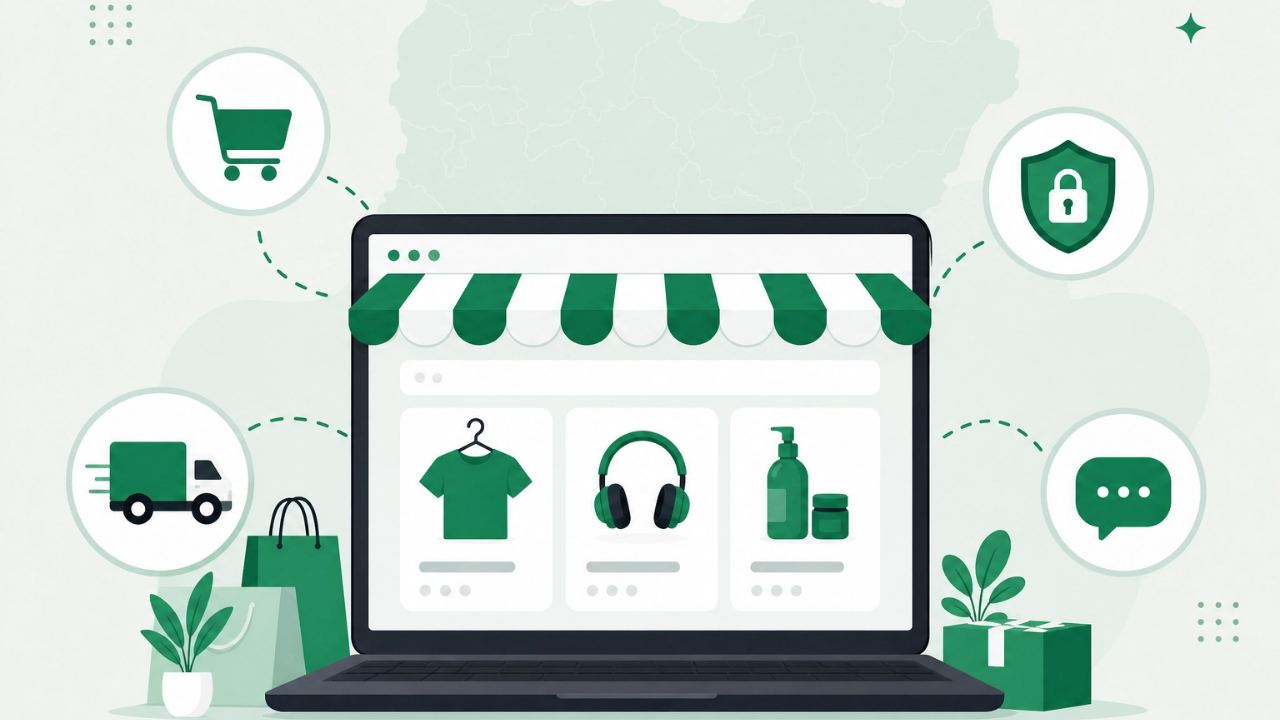
An online store is a website, an app or a digital platform where customers come to find what you sell, see your prices, and buy without needing to chase you on social media or wait for you to respond to a message. It is a 24/7 active shop that works whether you’re at your desk, on the road, or fast asleep.
In Nigeria today, more buyers than ever are shopping online and a lot of sellers are taking this advantage to expand their reach beyond Instagram feeds and WhatsApp business chats.
What Is an Online Store, Really?
An online store also called an ecommerce store, or online shop is a digital storefront that lets you sell products or services through the internet. Think of it as your physical shop, but open 24 hours a day, accessible from anywhere in Nigeria and beyond.
Think about the last time you visited Jumia or bought something from a brand’s website. You didn’t need to ask “is this available?” You just saw the product, saw the price, and either bought it or you didn’t. That’s what an online store does for your business. It removes friction from the buying process for both you and your customer.
When a customer visits your online store, they can:
- Browse through your products with photos and prices
- Add items to a cart and place an order
- Pay securely using bank transfer, card, or mobile money
- Get order confirmation and delivery updates automatically
The difference between this and posting a product photo on Instagram where your catalogue lives in a grid that changes every time you post or on WhatsApp, where your product list exists in a PDF you sent them three months ago that they’ve long deleted is that an online store is permanent, searchable, and organised.
How Does an Online Store Work?
Here’s a simple breakdown of the buying journey in an online store:
- Customer discovers your store either through Google, social media, or word of mouth
- They browse your product listings which includes clear photos, descriptions, and prices
- They add to cart and check out by choosing delivery options and entering their address
- Payment is made via Paystack, Flutterwave, bank transfer, or pay-on-delivery
- You receive the order through your dashboard which notifies you instantly
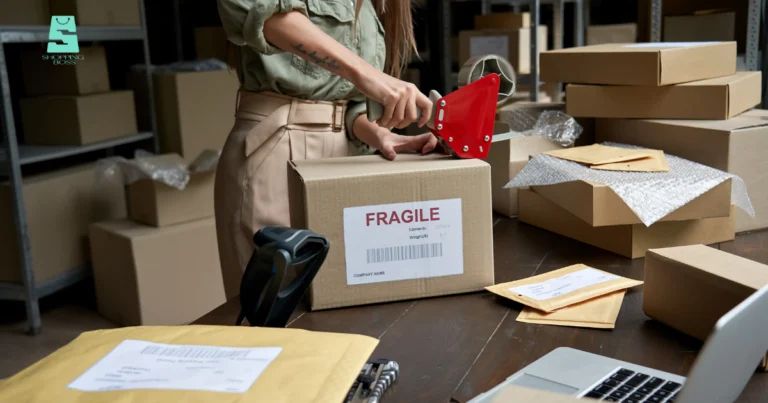
- You package and ship the order
- Customer receives their item and you earn a review or repeat purchase
The whole process is automated on a proper platform. All you have to do is focus on selling quality products; the store handles the rest.
Key Features of a Good Online Store

For your online store to convert visitors into paying customers, it must contain the following features:
Clear Product Listings
Not just a photo and a price. Your listings should answer the questions a customer would normally ask in a DM. What’s the material? What sizes are available? Does this come in other colours? How long does delivery take? The more your product page answers upfront, the less work you do after, and the more likely a buyer is to checkout without hesitation.
Simple, Fast Checkout
Every extra step at checkout is a reason for someone to abandon their cart. A name, a phone number, a delivery address, and a payment method are all you really need. The fewer clicks between “add to cart” and “order confirmed,” the better. A checkout that asks for too many details will lose customers especially mobile shoppers.
Payment Options That Match Nigerian Reality
Your store must accept what Nigerians actually use: bank transfer, Paystack, Flutterwave, USSD, and pay-on-delivery. If your customers can’t pay easily, they won’t pa altogether.
Mobile-First Design
Over 80% of Nigerian internet users browse on mobile phones. Your store must look and work perfectly on any screen size.
Inventory and Order Tracking
When you’re managing ten orders a month, keeping track in your head is possible. At fifty, it becomes a source of errors. At a hundred, it becomes a full-time job with no system. A proper online store shows you exactly what’s in stock, what’s been ordered, what’s been shipped, and what’s pending without you building a spreadsheet to manage it.
Delivery and Logistics Integration
The ability to connect with Nigerian courier services (GIG, Kwik, Sendbox) or manage your own delivery options is essential.
Your Own Domain
A store URL like yourbrand.com is a signal that tells a first-time customer that this is a real business. It shows up differently in WhatsApp previews and looks different when you print it on a business card or packaging. It’s a small thing that makes a noticeable difference in how people perceive and trust your brand.
Online Store vs Selling on Instagram or WhatsApp

Most Nigerian business owners start on Instagram or WhatsApp and that’s totally fine. But as business grows larger, those platforms becomes too small to accommodate all your needs, and ultimately start to slow your process down.
Here’s an honest comparison:
| Feature | Instagram/WhatsApp | Online Store |
| Order management | Manual, scattered in DMs | Organised dashboard |
| Payment collection | Bank transfer, back-and-forth | Automated at checkout |
| 24/7 sales | ❌ You must be online | ✅ Works while you sleep |
| Product catalogue | Limited, disappears | Always available |
| SEO / Google discovery | ❌ No | ✅ Yes |
| Customer data | You don’t own it | You own it completely |
| Professional appearance | Limited | Fully branded |
If you’re already using WhatsApp to close sales, you don’t have to abandon it. The smartest new thing Nigerian sellers does now is use a WhatsApp + Online Store combo that sends customers to the store for browsing, then closes orders on WhatsApp. Learn how to add WhatsApp checkout to your online store for the best of both worlds
Types of Online Stores

Not every online store looks the same or sells the same way. Before you set yours up, it helps to know which model fits your business:
Product-based stores are the most common among Nigerian sellers who deals in fashion, beauty, food, electronics, home goods, and everything in between. You stock the product, list it, sell it, ship it.
Digital product stores sell things that don’t need delivery: eBooks, templates, courses, music, graphics, or any downloadable file. The buyer pays and gets instant access. No logistics, no packaging, no courier drama.
Service-based stores are for people who sell their time or expertise, such as photographers, consultants, tailors, tutors. The store allows customers to book and pay for sessions or packages without a back-and-forth conversation.
Dropshipping stores let you sell products you don’t physically hold. When an order comes in, your supplier ships directly to the customer. This model reduces upfront investment but requires careful supplier management.
Wholesale stores are for sellers moving products in bulk usually to other businesses or resellers. The pricing structure, minimum order quantities, and checkout flow are different from a regular retail store.
Most Nigerian business owners run product-based stores, especially in fashion, beauty, food, and electronics. Your store type shapes the platform features you’ll need, so it’s worth being clear about this before you start building.
How to Create an Online Store in Nigeria
Starting an online store in Nigeria is more accessible than ever. Here’s a simple step-by-step path:
Step 1: Choose your niche and products What are you selling? Who are you selling to? Get clear on this before anything else.
Step 2: Choose a platform built for Nigerian businesses Not every ecommerce platform understands the Nigerian market, Nigerian payment gateways, local logistics, or Naira pricing. Choose a platform that does. (More on this below.)
Step 3: Set up your store Add your logo, brand colours, and the key pages (Home, Shop, About, and Contact).
Step 4: Add your products Upload clear photos, write honest descriptions, and price in Naira. Keep it simple.
Step 5: Set up payments Connect Paystack or Flutterwave and activate pay-on-delivery if relevant for your buyers.
Step 6: Create delivery options Define your delivery zones, fees, and which courier partners you work with.
Step 7: Launch and share your store link on Instagram, WhatsApp status, and TikTok. Start with your existing audience.
The full walkthrough of each step — including what to look out for on each platform, how to write product descriptions that actually sell, and how to handle your first set of orders is covered in detail in how to create an online store, with everything laid out for the Nigerian context specifically.
Benefits of Having an Online Store in Nigeria

The number of Nigerians shopping online has grown steadily over the last few years and it accelerated sharply after 2020. People who had never bought anything online started ordering groceries, clothing, and electronics from their phones. Some of those habits stuck and the customer base for online selling in Nigeria is now a growing, and lucrative one.
Still on the fence? Here’s what changes when you move from social media selling to a proper online store:
- You sell while you sleep. Orders come in at 2am when your WhatsApp is off. Your store never rests.
- You look more professional. A branded store builds more trust than a DM. Customers feel safer ordering from a real website.
- You reach buyers outside your city. Someone in Kano can order from your Lagos-based store. Your market is now all of Nigeria and beyond.
- You own your customer data. Instagram can restrict your account. WhatsApp can go down. But your store, your customer list, order history, and revenue data belongs to you.
- You scale without chaos. Managing 50 orders in DMs is a nightmare. An organised store dashboard keeps everything clear, even when business gets busy.
- You get discovered on Google. When someone searches “buy ankara fabric Lagos” or “best skincare products Nigeria,” a well-optimised online store can show up. Instagram posts don’t rank on Google. Your store can.
What to Sell in Your Online Store
There are tons of ecommerce business ideas to start online. However, in Nigeria, the online shopping categories that consistently perform well include:
- Fashion and clothing — ready-to-wear, traditional, streetwear
- Beauty and skincare — locally made and imported products
- Food and groceries — processed foods, local produce, snacks
- Electronics and gadgets — phones, accessories, cables
- Home and décor — furniture, fabrics, kitchen items
- Health products — supplements, fitness gear
- Digital products — courses, eBooks, graphics templates
You don’t have to sell a popular category to succeed. What matters most is knowing your customer, pricing correctly, and delivering well.
How to Get Your First Customers
The first question every new Nigerian online seller asks is some version of: “I’ve set up the store, now what?” And the answer most people expect involves a substantial advertising budget. It usually doesn’t have to.
Your first customers are almost always in your existing circles — people who already know you, trust your word, and are willing to try something you’re selling.
- Tell your WhatsApp contacts first. Post on your status with your store link. Your first 10 customers are probably people who already trust you.
- Leverage Instagram and TikTok organically. Show your products in real life including packaging, unboxing, behind-the-scenes content.
- Ask for referrals from your first buyers. Happy customers in Nigeria talk. One satisfied customer in a WhatsApp group is worth more than an ad.
- Optimise your store for Google. Use the name of what you sell in your product titles and descriptions. This brings in search traffic over time and for free.
- Join relevant communities. Twitter/X threads, Facebook groups, and Telegram groups full of your target audience are goldmines for organic promotion.
Read more: How a Small Business Owner Got Her First 100 Orders Using an Online Storefront
Best Online Store Platform for Nigerian Businesses
The platform question trips up a lot of Nigerian sellers. The well-known international options like Shopify, WooCommerce, BigCommerce are built for markets where Stripe is the payment gateway, and most customers have to use credit cards, a reality that restricts most Nigerian sellers from setting up a shop online.
Forcing those tools to work in the Nigerian context means workarounds at almost every step: payment gateways that are technically supported but not natively, delivery costs that don’t account for Nigerian logistics realities, and pricing structures in foreign currency that eat into already tight margins.
What a Nigerian seller actually needs from a platform is different. Choosing the right platform is one of the most important decisions you’ll make.
A platform built for the Nigerian market understands:
- Naira pricing
- Local payment gateways (Paystack, Flutterwave)
- Nigerian logistics and delivery
- Mobile-first shoppers
- The way Nigerian buyers discover and trust products
Many of the above-mentioned global platforms are powerful but expensive and not designed with the Nigerian seller in mind. You end up paying in dollars and working around features that don’t fit your market.
Shopinbos is built specifically for African business owners especially Nigerians giving you a professional online store with everything you need to sell, manage orders, and grow, without the complexity or cost of global platforms.
Create your online store with Shopinbos
Not sure which platform is right for you? Read our full Platform Comparison: Shopinbos vs QShop vs Bumpa: Which Store Builder Is Right for You?
And if you’re currently selling on social media and wondering when to make the move, check out: 7 Signs You’ve Outgrown WhatsApp Selling and How to Move from Social Media Selling to Your Own Online Store.
One Last Thing
If you’ve read this far, you’re not just curious about what an online store is, you’re thinking about building one. The decision itself is simpler than the preparation makes it seem. You don’t need everything perfect before you launch. You need the right platform, your first products listed properly, and a payment method your customers can use.
The rest such as the SEO, the reviews, the returning customers, and the orders that come in while you sleep, that builds over time, on top of a foundation that works when you partner with the right online store builder platform.
Create your online store with Shopinbos today!
FAQs About Online Stores
An online store is a website or digital platform that allows a business to sell products or services to customers over the internet. Customers can browse products, add items to a cart, pay, and receive their orders, all online.
To open an online store in Nigeria, choose a platform that supports Nigerian payment gateways (like Paystack or Flutterwave), add your products with clear photos and Naira prices, set up your delivery options, and launch. Platforms like Shopinbos are built specifically for Nigerian sellers and make this process straightforward.
The cost depends on the platform. Some platforms charge a monthly subscription, while others take a small commission per sale. You can start with a very affordable plan and scale as your business grows. The key cost to factor in is your domain name and any payment gateway fees.
Popular online stores in Nigeria include Jumia, Konga, and Jiji. However, thousands of Nigerian entrepreneurs also run their own independent branded stores using platforms like Shopinbos, which is built specifically for African sellers.
Absolutely. Many Nigerian sellers are now turning their WhatsApp into an online store. Your online store acts as your professional catalogue and order system, while WhatsApp keeps the personal connection with customers. You can even add a WhatsApp checkout button to your store so customers can complete orders on WhatsApp if they prefer. Learn more on How to Add WhatsApp Checkout to Your Online Store.
Ready to grow your own shop?
Shopinbos is free to start. Rex builds your storefront in 90 seconds, Peggy handles the rest.
Get early access