
Have you always wanted to know how to know how to create an online store? Well, here’s a short list of the things you need to create an online store: you need a platform, your products listed properly, a payment method, a delivery setup, and a live link you can share.
If you already have a business and know what you’re selling, you can have your store ready to take orders within a day, no coding, no developer, and no technical background required.
This guide is for Nigerian sellers who are ready to move and just need the clearest path forward.
Step 1: Pick a Platform That Works for Nigeria
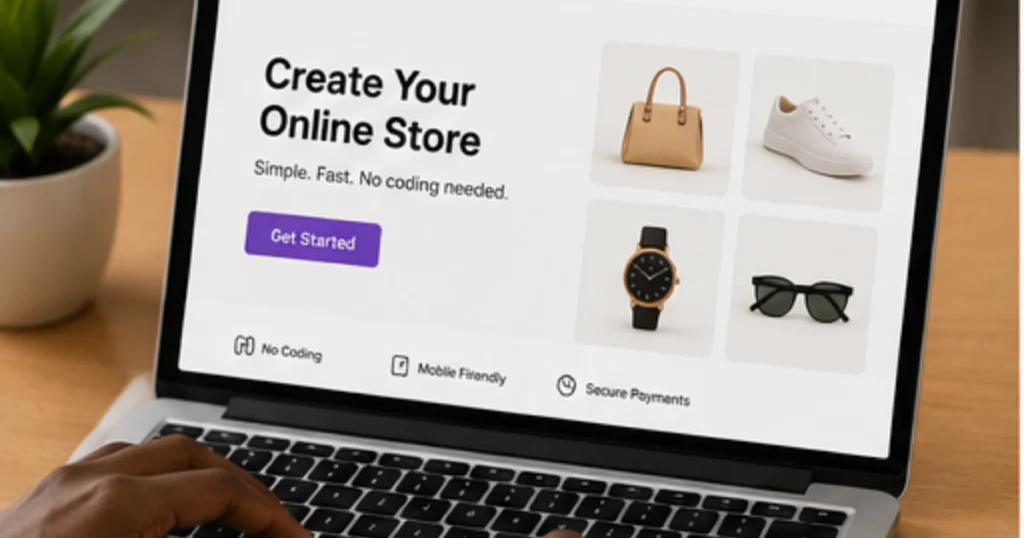
The platform you choose determines how smoothly everything else runs. Many popular platforms are built for markets where credit cards are standard and Stripe is the default payment gateway which means a Nigerian seller ends up working around the system from the very first step.
What you actually need is a platform where Paystack or Flutterwave connects natively, where you can price in Naira, where pay-on-delivery is a built-in option, and where the checkout works well on mobile because most of your buyers are ordering from their phones, not a laptop.
How to create an online store in Nigeria becomes a much simpler question when your platform was designed with that exact context in mind.
Step 2: Set Up Your Store Identity
Upload your logo, choose your brand colours, and give your store a name your customers will recognise. You don’t need a perfect brand identity to launch, clean and readable is enough to start.
The pages to have ready before you go live include a homepage, a shop page, a short About page, and a way for customers to contact you. Your homepage has one job to tell a new visitor what you sell and how to buy it. Everything you put there must communicate rightly about your business to your target audience. Keep it simple. When people decide to create an online store, they often overthink the design and underthink the clarity.
Step 3: Add Your Products the Right Way

Your product pages are doing the selling when you’re not there so they need to answer the questions a buyer would normally ask in a DM.
For each product, get these four things right:
- Photo: natural light, clean background, at least two angles
- Description: what it is, key details, available variants, sizes
- Price: clear, in Naira, with any delivery fee logic noted
- Stock status: available, limited, or out of stock
How to build an online store from scratch that actually converts starts here. Sellers who rush the product listings end up with a store that looks open but doesn’t move. Take the time on this step. It pays back every day after launch.
Step 4: Set Up Payments and Delivery
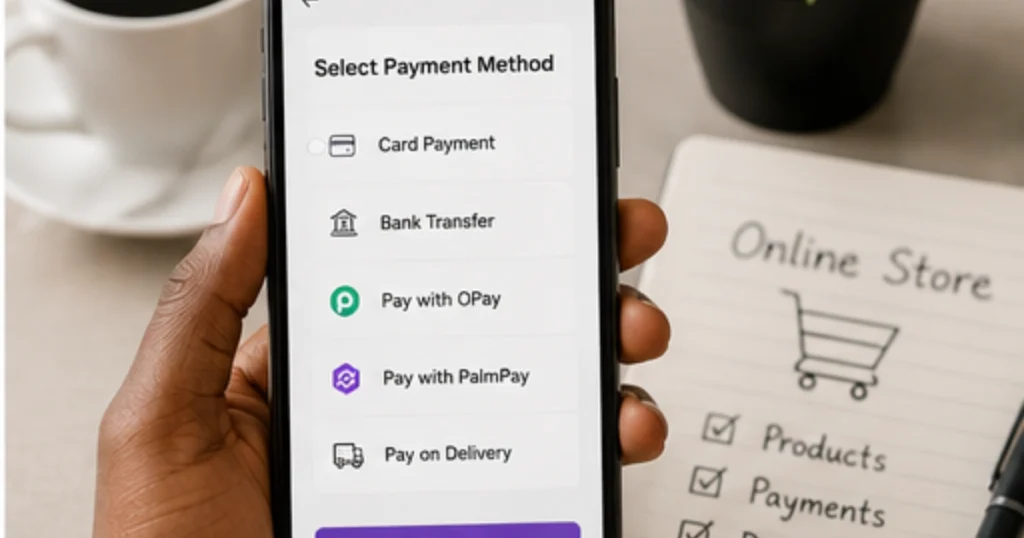
Connect your payment gateway and define your delivery options before anything goes live. These two things determine whether a customer completes an order or abandons it halfway.
For payments, Paystack and Flutterwave are the standard for Nigerian online stores. Both support card payments and bank transfer, both pay out in Naira, and both are straightforward to connect on a platform built for Nigeria.
For delivery, be specific. State which areas you ship to, the fee per zone, how long delivery takes, and which courier you use ( GIG, Kwik, Sendbox), or your own. Vague delivery information is one of the most common reasons your buyers drop off at checkout. They want to know exactly what they’re paying and when it arrives before they confirm.
One thing worth setting up here is a WhatsApp button on your store. Many Nigerian buyers want to ask a quick question before they pay, and a direct link on your product page to a Whatsapp checkout closes orders that would otherwise go cold.
How to open an online store that Nigerians actually trust comes down to removing uncertainty at every point and clear payments and delivery information do most of that work.
Step 5: Launch and Market your Store

Launch your store and start with your existing audience. Your first customers are almost always people who already know you. Post your store link on your WhatsApp status, put it in your Instagram bio, and share it in any group where your buyers already are. You don’t need a big launch campaign. You need the right people to see it and take a first chance on you.
The moment you create an online store and share that link, you’ve crossed from “I’m thinking about it” to “I’m open for business.” Before you hit publish, do a quick run-through: confirm your product photos load correctly, process a test order to check the payment flow, verify your delivery zones and fees are accurate, and make sure your contact details work. A proper online store launch checklist covers everything worth confirming so nothing catches you off guard on day one.
Your first few orders are a learning run. They’ll show you how the checkout feels to a real buyer, whether your delivery process holds up, and what questions your product pages still need to answer.
What Comes After Launch
Going live is the beginning, not the finish line. How you handle the first orders, how you collect early reviews, and how you keep sales moving without relying on ads will determine how fast the store grows. Most Nigerian sellers who decide to create an online store and stay consistent find that the second month looks very different from the first. If you want the full picture of how a Nigerian online store works, from discovery to repeat customers, the guide on what an online store is and how it works covers all of it in one place.
Create your online store with Shopinbos →shopinbos.com
FAQs on How to Create an Online Store
The steps on how to create an online store in Nigeria are straightforward: choose a platform built for Nigerian sellers, add your products with photos and Naira prices, connect Paystack or Flutterwave, set your delivery options, and publish. Shopinbos handles the technical side so you focus on your products and customers.
With your product photos and details ready, a few hours is realistic. Most of the time goes into product listings, the platform setup itself is quick.
Most platforms offer affordable starting plans. The goal is a working store first, then you scale spending as revenue comes in. Creating an online store with store builders like Shopinbos costs ₦3,500 and ₦15,000 per month with payment gateway fees included.
Yes, and many Nigerian sellers do both effectively. The store handles your catalogue, orders, and payments. WhatsApp handles quick questions and buyer reassurance. When both are set up with purpose, they work well together.