
Starting an online business should be profitable, but most sellers get stuck competing over the same products everyone else is selling. Prices get driven down, advertising costs rise, and profits disappear. The secret isn’t fighting for space in crowded markets, it’s finding product ideas with decent demand that customers want but can’t easily find.
The global eCommerce market continues expanding, with the blue light blocking glasses market alone valued at $3.0 billion in 2025, proving there’s massive opportunity in specialized niches. This guide shows you how to identify low-competition products, validate demand, and discover twenty specific niches perfect for first-time sellers.
What Are Low-Competition Product Ideas?
Low-competition product ideas are items that have decent customer demand but aren’t oversaturated with sellers. Think of them as the sweet spot where you can actually stand out without needing a fortune in advertising or years of experience.
Low-competition products typically share a few characteristics. They solve specific problems for targeted audiences rather than appealing to everyone. They often serve niche communities with particular interests or needs. Most importantly, they don’t have dozens of established brands dominating every search result and marketplace listing.
The beauty of these products is that beginners can compete on factors beyond just price. You can win customers through better product descriptions, superior customer service, unique bundling, or simply by being more attentive to what buyers actually want. When you’re not battling fifty other sellers offering identical items, you have room to build relationships and establish your reputation.
Many successful eCommerce entrepreneurs started by targeting underserved markets before expanding into broader categories. This approach allows you to learn the ropes, generate revenue, and build confidence without the pressure of competing against industry giants from day one
How to Find Low-Competition Product Ideas for Beginners

Finding profitable product ideas requires systematic research, not guesswork. Start with customer pain points, the most profitable products solve genuine problems that customers actively discuss online. Monitor Reddit communities, Facebook groups, and product reviews for recurring complaints. Phrases like “I wish there was…” reveal unmet market needs.
Use search volume strategically. Products with 1,000-10,000 monthly searches often represent the sweet spot, high enough to indicate real demand, but not so high that major brands have dominated the space. Tools like Google Keyword Planner and Ubersuggest reveal these opportunities.
Validate with Google Trends. Check whether interest is growing, stable, or declining, emerging trends with upward trajectories present excellent opportunities for beginner sellers. You want consistent or increasing search volume without massive spikes indicating temporary fads.
Target specific demographics. Instead of targeting everyone, focus on specific groups with unique needs: remote workers, pet owners, seniors, or people living in small spaces. These micro-niches have passionate buyers willing to pay premium prices for specialized solutions.
Analyze competition gaps. Pay attention to poor reviews of existing products, as these reveal improvement opportunities that give you a competitive advantage. Check Amazon’s 2-3 star reviews to see what frustrates customers.
Monitor social media trends. Browse TikTok hashtags, Instagram reels, facebook marketplace and Pinterest boards related to specific interests. The surge in remote work and online education has led to extended screen exposure, driving strong demand for specialized solutions like ergonomic accessories and wellness products.
You can access our free comprehensive guide designed for first-time sellers to help them navigate product ideas research faster, whether you’re selling on Amazon, Shopify, or any other eCommerce platforms..
20 Product Ideas with Low Competition for Beginners
Understanding current market dynamics helps when selecting product ideas. After a strategic research using some of the systematic approach listed above, we found the twenty product ideas that combine proven demand with manageable competition, under their different niches making them ideal starting points for new sellers.
Health & Wellness Accessories
The health-conscious market continues expanding, with many specific problems remaining unsolved by mainstream products. This category offers multiple entry points for beginners.
- Neuropathy Relief Socks – Specialized compression socks with targeted pressure points for diabetic foot pain relief. For some with neuropathy, wearing compression socks is the best way to combat symptoms like swelling and fluid retention.
- Acupressure Foot Mats – Portable mats with strategic pressure points for plantar fasciitis relief. These tension-relieving tools promote blood flow and release tension, making them suitable for recovery.
- Blue Light Sleep Glasses – Amber-tinted glasses specifically designed for evening computer use and better sleep. Rise in sleep disorders linked to increased blue light exposure has become a key factor driving demand, with the market valued at $3.0 billion in 2025.
- Posture Correction Wearables – Discreet vibrating devices that alert users when slouching during work.
- Breathing Exercise Tools – Simple devices that guide proper breathing techniques for anxiety management.
Pet Care Innovation
Pet owners spend heavily on their animals, but many specialized needs go unaddressed by general pet products. These product ideas tap into passionate, willing-to-spend audiences.
- Senior Dog Mobility Aids – Harnesses and ramps specifically designed for aging dogs with joint issues.
- Cat Anxiety Thunder Shirts – Weighted compression garments that calm cats during storms or loud noises.
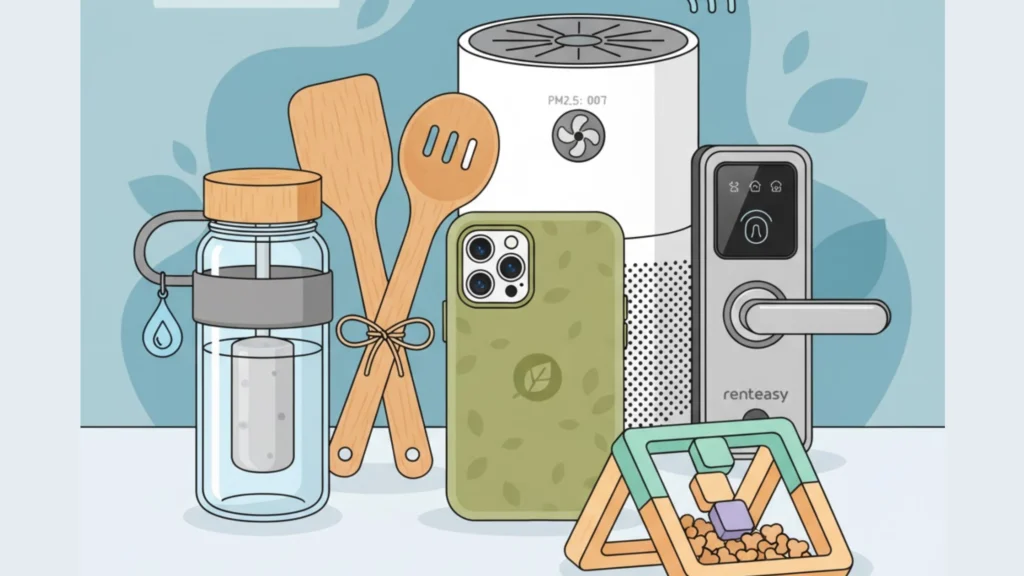
- Puzzle Feeders for Specific Breeds – Slow-feeding bowls designed for flat-faced breeds like bulldogs and pugs.
- Orthopedic Raised Food Bowls – Adjustable height feeders that reduce neck strain for large breed dogs.
Smart Home Solutions for Apartments
Urban renters need technology solutions that work without permanent installation or landlord approval. This creates unique product opportunities.
- Renter-Friendly Smart Locks – Keyless entry systems that attach over existing deadbolts without drilling.
- Noise-Canceling Window Inserts – Removable acoustic panels that reduce street noise in city apartments.
- Compact Air Purifiers with Monitoring – Small units that display air quality data via smartphone apps.
Sustainable Living Products
Environmentally conscious consumers want eco-friendly alternatives that don’t sacrifice convenience or effectiveness. This growing segment values quality over price.
- Compostable Phone Cases – Biodegradable phone protection made from plant-based materials.
- Bamboo Kitchen Utensil Sets – Complete cooking tool sets that replace plastic utensils with sustainable alternatives.
- Water Filter Bottles with Replaceable Cartridges – Portable filtration that reduces single-use plastic bottles.
Hobby & Craft Specialization
Creative hobbyists often need specialized tools and supplies that mass-market craft stores don’t carry. These product ideas serve dedicated communities.
- Resin Casting Starter Kits – Complete sets for jewelry making with safety equipment and detailed instructions.
- Leather Working Tool Sets – Professional-grade tools for beginners entering leather crafting.
- Embroidery Hoop Organization Systems – Wall-mounted storage that displays and organizes multiple hoop sizes.
Home Organization Solutions
Modern living spaces demand smart organization solutions that maximize efficiency without sacrificing style.
- Under-Cabinet Storage Pods – Slide-out organizers that utilize wasted space beneath kitchen and bathroom cabinets.
- Cable Management Furniture Inserts – Desk organizers with built-in wire management for home office setups.
Ready to validate these product ideas and start your eCommerce journey? Visit Shopinbos for comprehensive product research guides, supplier vetting strategies, and platform-specific setup tutorials designed specifically for first-time sellers.
Conclusion
Finding profitable product ideas with low competition isn’t about luck, it’s about knowing where to look and using the right systems to evaluate opportunities. The key is focusing on products that solve real problems customers face daily rather than chasing viral trends that disappear as quickly as they appeared. Start with one category that genuinely interests you, do thorough research using the tools and strategies outlined above, test small with your first orders, and scale what works. Whether you choose health accessories, pet products, or home organization solutions, your success depends on understanding your customers’ needs and delivering solutions they can’t easily find elsewhere. With patience, proper research, and a commitment to serving your niche well, you can build a profitable online business in 2025 and beyond.
Frequently Asked Questions
What makes a product “low-competition” for beginners?
A low-competition product has consistent or growing search volume, solves everyday problems, and isn’t dominated by big brands, typically with fewer than 20 active sellers and review counts under 500.
How much money do I need to start selling low-competition products?
You can start with $200-$500 for initial inventory if working with suppliers offering low minimum order quantities. Many beginners use dropshipping models requiring minimal upfront investment, allowing you to test product ideas before committing to large orders.
Can I validate product ideas for free?
Yes, Google Trends provides free market research for product discovery and validation. Additionally, use TikTok trends, Reddit communities, Amazon Movers & Shakers, and free keyword tools to spot high-demand, low-competition items before investing money.
Should I focus on seasonal or evergreen products?
Products with steady demand year-round are generally safer investments than highly seasonal items, unless you can plan inventory and cash flow accordingly. Consider balancing both types to maintain consistent revenue throughout the year.