
Starting your first online store is an exciting step, but it can also feel overwhelming, especially when you’re watching your budget. The good news? You don’t need a massive investment to get started. Thanks to a wealth of powerful free ecommerce tools, you can build, launch, and grow your store without spending a dime upfront. This guide is designed for absolute beginners and will walk you through the essential, completely free resources you need to turn your business idea into a reality this year.
Building Your Storefront: Foundation Free Ecommerce Tools
Before you can sell anything, you need a digital storefront. This is where you’ll showcase your products and process orders. The choice of an ecommerce platform is your first and most critical decision. For beginners, leveraging free ecommerce tools for store creation is the smartest way to test the waters.
Platforms like Shopify and WooCommerce offer beginner-friendly, free plans or trials that let you build a professional-looking store without coding knowledge. These free ecommerce tools provide templates, secure hosting, and shopping cart functionality. The key is to choose a platform that feels intuitive to you. Remember, your goal at this stage is to get your store live and functional. You can always upgrade to a paid plan with more features as your sales grow. For a detailed breakdown of how to choose, our guide on how to select the best ecommerce platform for your niche can help you make an informed decision.
Finding Products to Sell: Sourcing and Inventory Ecommerce Tools
Once your store is set up, the next step is to stock it with products. Whether you’re creating your own items, using a print-on-demand service, or considering dropshipping, there are free ecommerce tools to streamline the process.
For product research, tools like Google Trends are invaluable and completely free. They help you understand what people are searching for, allowing you to identify potentially profitable niches. If you’re holding physical inventory, a simple spreadsheet can be your best friend. Google Sheets is a powerful, free tool for managing stock levels, product variants, and costs. For those exploring dropshipping, many suppliers have free-to-access product lists that you can import directly into your store. Using these free ecommerce tools for sourcing helps you validate your product ideas before you commit any money.
Ecommerce Tools for Marketing on a $0 Budget
A beautiful store with great products is useless if no one sees it. Marketing is how you attract customers, and it’s an area where free ecommerce tools truly shine. You don’t need a large advertising budget to make your first sales.
Start with the power of social media. Platforms like Instagram, TikTok, and Facebook are free to use and are perfect for building a community around your brand. Consistently posting engaging content is a powerful strategy. Email marketing is another cornerstone of ecommerce success, and free plans from services like Mailchimp allow you to build a subscriber list and send your first campaigns. Furthermore, don’t underestimate the power of search engine optimization (SEO). Using free keyword research tools such as Google Keyword Planner, Ubersuggest, Semrush and KWFinder can help you optimize your product descriptions to rank higher on Google, bringing in a steady stream of free, organic traffic.
Getting Paid: Free Payment Gateway Tools
A beautiful store and a great marketing strategy all lead to one crucial moment: getting paid. Fortunately, accepting payments is an area where you can leverage powerful free ecommerce tools without upfront costs. Services like PayPal and Stripe are free to integrate with your store, with costs coming only as a small transaction fee when you make a sale. This means no upfront costs for you.
Choosing the right one depends on your location and products. For a detailed comparison of fees and features, see our comprehensive guide on choosing the best payment gateways for small stores.
Want to simplify your setup? Get our free Payment Gateways Starter Pack for a comparison cheat sheet and integration guide tailored for beginners.
Free Ecommerce Tools for Analytics and Insight
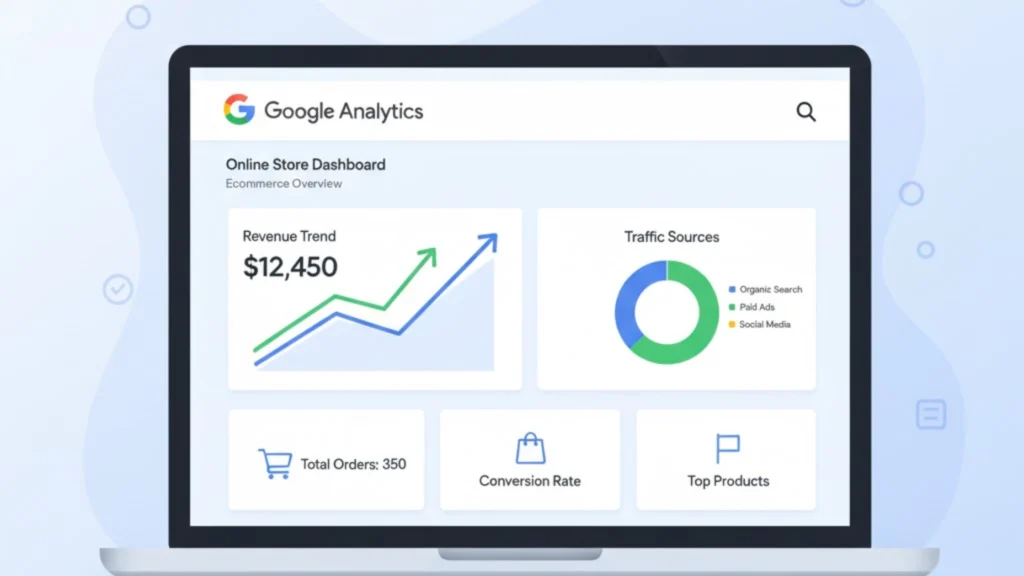
To grow your store, you need to understand how it’s performing. How many people are visiting? Where are they coming from? What products are they looking at? Analytics provides these answers, and the best tool in the business is also free.
Google Analytics is a non-negotiable free ecommerce tool for any serious store owner. By adding a small piece of code to your site, you unlock a wealth of data about your visitors’ behavior. You can see which marketing efforts are driving sales, which pages are most popular, and where customers are dropping off in the checkout process. This data is pure gold because it tells you exactly what to improve. Most major ecommerce platforms have easy, built-in integration for Google Analytics, making setup simple even for non-technical users.
Managing the Business: Operational and Productivity Aids
Running a store involves more than just marketing and sales. You have to manage customer inquiries, handle finances, and stay organized. Here, too, free ecommerce tools can automate and simplify your workload.
For communication, consider using a free live chat widget on your website to answer customer questions in real-time. For project management and staying organized with your tasks, Trello offers a robust free plan. When it comes to accounting, keeping track of your income and expenses is crucial for understanding your profitability. Simple, free spreadsheet templates can be perfectly adequate when you’re just starting out, helping you manage your money without the complexity of paid software.
Your Ecommerce Journey Starts Now
Building a successful online store is a marathon, not a sprint. By strategically using these free ecommerce tools, you can significantly lower the barrier to entry and validate your business idea with minimal risk.
From building your website and sourcing products to marketing and analytics, Shopinbos, provide clear, actionable guides and curated tool recommendations to help you focus your efforts and connect with your first customers. The most important step is the first one. Choose one tool from this list, sign up, and start building.
Your ecommerce dream is more achievable than you think. Let us help you build a marketing strategy that works.
Frequently Asked Questions (FAQs)
Are these “free” ecommerce tools really free?
Yes, the tools listed here offer genuinely free plans or trials that are powerful enough to launch and run a new store. Some may have limitations on features or usage, but they provide core functionality without requiring a credit card or payment.
What is the best free ecommerce platform for a complete beginner?
Platforms like Shopify’s free trial or a WooCommerce setup are excellent for beginners due to their user-friendly interfaces and extensive support resources. The “best” one depends on your specific needs, but these are great starting points for their ease of use.
Can I run a full-time business using only free ecommerce tools?
It’s possible to start and validate a business using free tools. However, as your store grows and generates revenue, you will likely need to upgrade to paid plans for more advanced features, better support, and higher usage limits to support your scaling operations.
How do I accept payments for free on my online store?
Most ecommerce platforms integrate with payment gateways like PayPal or Stripe. While the platform and gateway themselves may be free to set up, they typically charge a transaction fee (a small percentage of each sale). This is standard practice across the industry.