
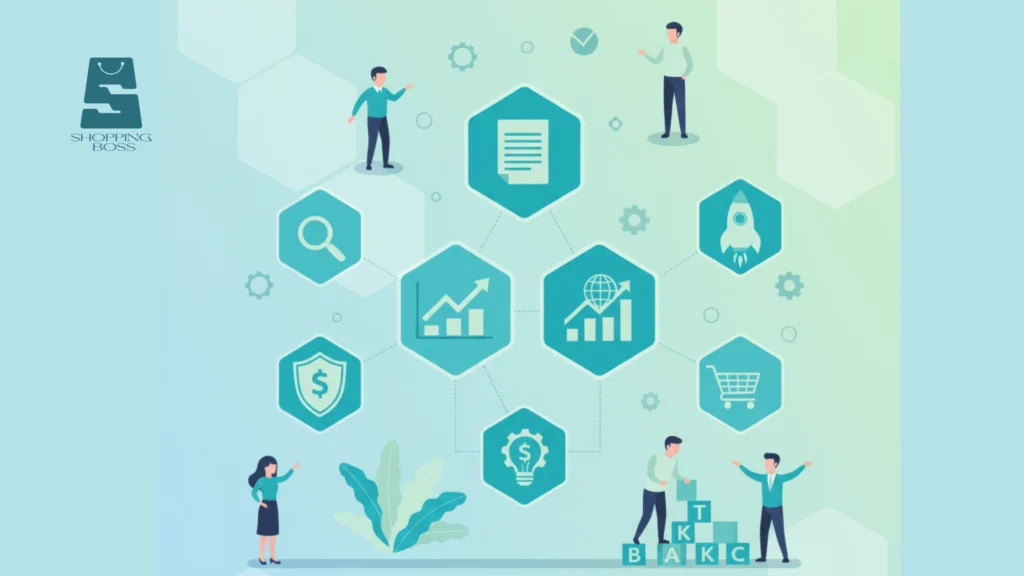
Starting an online store can feel overwhelming, especially when you’re staring at a blank page wondering where to begin. A well-crafted startup business plan template can transform that anxiety into clarity, giving you a roadmap to follow from day one.
Your business plan lays the foundation for the success of your business. Learn how to write a business plan that suits your needs quickly and efficiently using these startup business plan templates.
Why Every Ecommerce Seller Needs a Business Plan
You may have wondered if you really need a business plan if you’re just starting out?
The short answer is yes, and here’s why. A startup business plan template serves as your business GPS. It helps you define what you’re selling, who you’re selling to, how you’ll get funding or bring on new partners. Without one, you’re essentially driving without directions, hoping you’ll stumble upon success.
What Makes a Good Ecommerce Business Plan Template
Not all startup business plan templates are created equal, especially in the ecommerce space. A template designed for a traditional brick-and-mortar store won’t address the unique challenges you’ll face selling online.
A quality ecommerce business plan template should include sections on market research, product sourcing strategies, digital marketing channels, website platform selection, inventory management approach, customer acquisition costs, and financial projections tailored to online retail margins. It should also be flexible enough to adapt as your business evolves.
The best templates are straightforward. Remember, this document is for you first, making it readable and actionable matters more than making it sound impressive. If you need help understanding which ecommerce platform works best for your business model, checking out resources on choosing the right ecommerce platform can complement your planning process beautifully.
1. The Lean Startup Business Plan Template
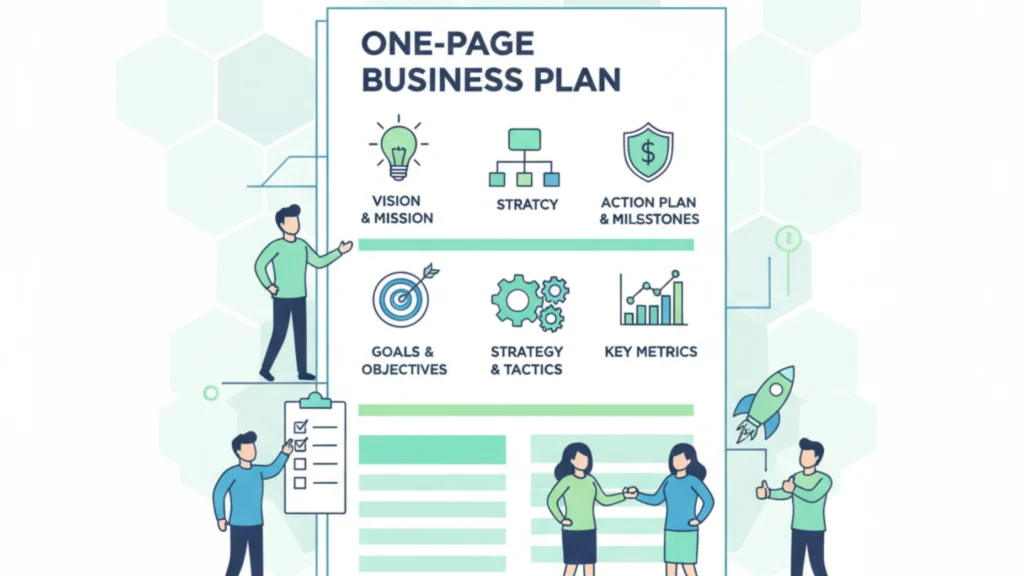
Perfect for sellers who want to launch quickly, the lean startup business plan template strips away unnecessary fluff and focuses on what matters most. This one-page format covers your value proposition, customer relationships and segments, revenue streams, cost structure, channels, and other key metrics to track.
This approach works exceptionally well for dropshipping businesses or print-on-demand sellers who need to test ideas rapidly. This startup business plan template allows you to describe or start your business immediately.
The lean format is ideal if you plan to regularly change or improve your business plan. Major business plan software platforms like LivePlan and Lean Stack offer downloadable versions specifically designed for online retailers.
2. The Traditional Ecommerce Business Plan Template
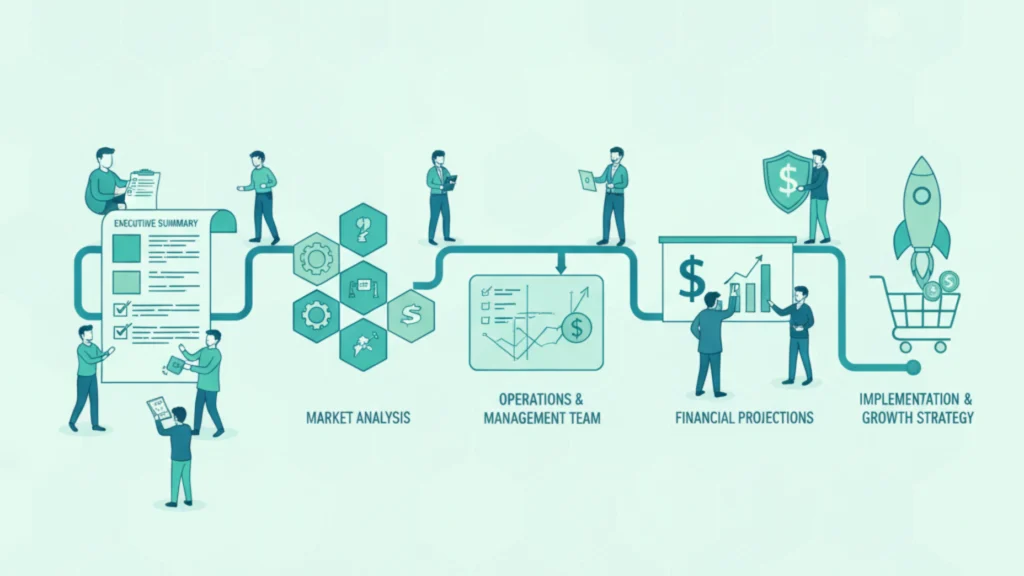
For sellers seeking funding or partnerships, the traditional format remains the gold standard. It is a comprehensive startup business plan template that includes an executive summary, company description, market analysis, organizational structure, product line details, marketing and sales strategies, funding requirements, and detailed financial projections.
Think of this as the formal version of your business vision. Banks, investors, and potential business partners commonly request for this. Templates from the Small Business Administration, Bplans, and Shopinbos provide industry-specific versions that speak the language lenders understand.
This format typically runs 20-40 pages and requires significant research. While time-intensive, working through this startup business plan template gives investors detailed insights into your business viability, before spending money.
3. The Business Model Canvas Template
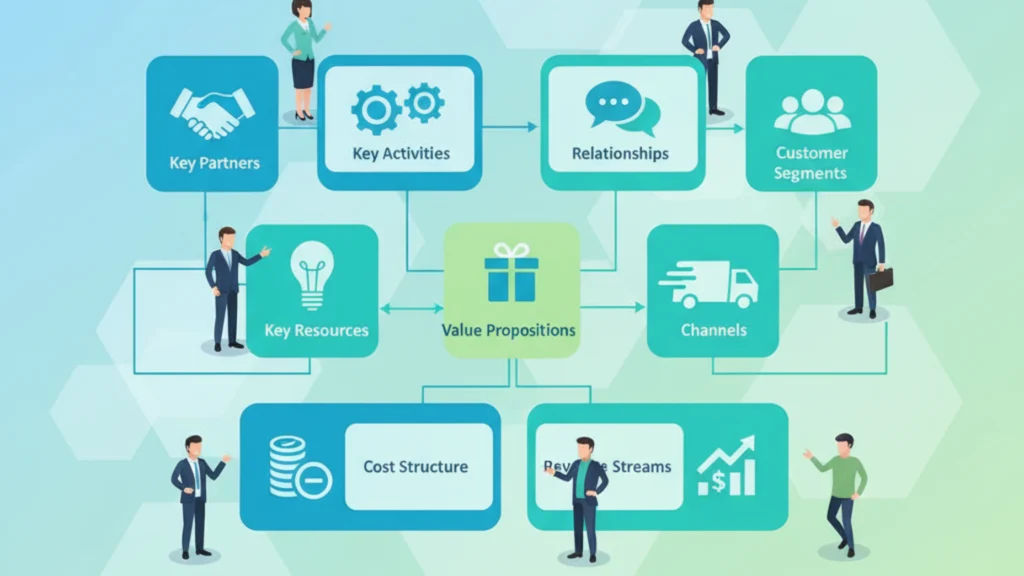
Similar to the lean approach but more comprehensive and with a broader perspective. The Business Model Canvas takes a visual approach to planning, using nine building blocks arranged on a single page. For ecommerce sellers, this startup business plan template offers sections for key partners (suppliers, fulfillment services), key activities (marketing, customer service), value propositions, customer relationships, customer segments, channels, cost structure, and revenue streams.
This model works brilliantly for sellers operating across multiple platforms or sales channels. You can create separate canvases for Amazon, your own website, and social media selling, then compare them side-by-side to see where to focus resources.
Strategyzer offers the original Business Model Canvas template, but numerous ecommerce-specific versions exist online.
4. The Growth-Focused Business Plan Template
Once you’ve made initial sales and validated your concept, this startup business plan template helps you shift from survival mode to growth mode. Growth-focused templates emphasize scalability strategies, customer lifetime value calculations, retention tactics, team building plans, and expansion opportunities.
This template assumes you have baseline data to work with, conversion rates, average order values, customer acquisition costs, and repeat purchase rates. You’ll use these metrics to project scaling scenarios and identify bottlenecks before they limit growth.
Templates from entrepreneurship organizations like Entrepreneurs’ Organization and growth-focused platforms like GrowthMentor provide frameworks specifically for businesses ready to scale. These often include scenario planning sections where you map out best-case, worst-case, and most-likely growth trajectories.
5. The Niche-Specific Ecommerce Template
Different ecommerce models face different challenges. Niche-specific startup business plan templates address these unique considerations directly.
For example, dropshipping templates emphasize supplier reliability assessments and margin calculations for hands-off inventory. Handmade goods templates include production capacity calculations and material sourcing strategies. Amazon FBA templates focus on product research, keyword optimization, and inventory storage fees.
Finding templates tailored to your specific niche saves time and ensures you’re addressing the right questions.
6. The Pitch Deck Business Plan Template

If you’re seeking investors, partners, or even early team members, you need a visual presentation version of your business plan. Pitch deck templates use slides instead of paragraphs, combining compelling visuals with concise text to tell your business story.
While not a replacement for a detailed business plan template, pitch decks complement written plans beautifully. They force you to distill complex ideas into simple, memorable concepts. Most pitch decks include 10-15 slides covering problem, solution, market opportunity, business model, traction, team, competition, and financial projections.
Tools like Canva, Beautiful.ai, and Pitch offer ecommerce-friendly templates with professional designs. Remember, investors see dozens of pitches, you need to communicate clearly and quickly why your online store deserves attention and funding.
How to Choose the Right Template for Your Ecommerce Business
With so many options, how do you pick the right startup business plan template that suits your needs? Start by asking yourself three questions:
- What stage is my business in?
- Do I need external funding?
- How much time can I dedicate to planning right now?
If you’re in the idea stage, lean templates get you moving quickly. If you need bank loans or investor funding, traditional formats are non-negotiable. If you’re already selling and looking to scale, growth-focused templates provide the framework you need.
Bringing Your Business Plan to Life
Having a startup business plan template is just the beginning. The real work comes in filling it out honestly, researching thoroughly, and then executing what you’ve planned. Many new sellers create beautiful business plans but never take action, don’t let that be you.
Set aside focused time each week to work on your plan. Research one section at a time instead of trying to complete everything in a marathon session. Talk to potential customers, study successful competitors, and crunch realistic numbers based on industry benchmarks rather than wishful thinking.
At Shopinbos, we understand that starting an ecommerce business involves more than just planning, it requires ongoing learning, practical resources, and community support. That’s why we’ve built a comprehensive library of guides covering everything from product sourcing to marketing strategies, all written specifically for first-time sellers navigating the online retail landscape.
Frequently Asked Questions
Do I really need a written business plan to start selling online?
While you can technically start selling without a formal plan, having even a basic startup business plan template significantly increases your chances of success. It helps you avoid costly mistakes, secure funding if needed, and stay focused on your goals.
How often should I update my ecommerce business plan?
Review your startup business plan template quarterly during your first year and at least twice yearly after that. Your plan should evolve as you gather real customer data, test marketing channels, and understand your actual costs and margins. A business plan isn’t a one-time document but a living guide that grows with your business.
Free startup business plan templates from reputable sources like SCORE, the Small Business Administration, and established ecommerce platforms work perfectly well for most new sellers. Paid templates might offer prettier formatting or more handholding, but they don’t fundamentally provide better structure. Save your money for inventory, marketing, or tools that directly generate revenue.