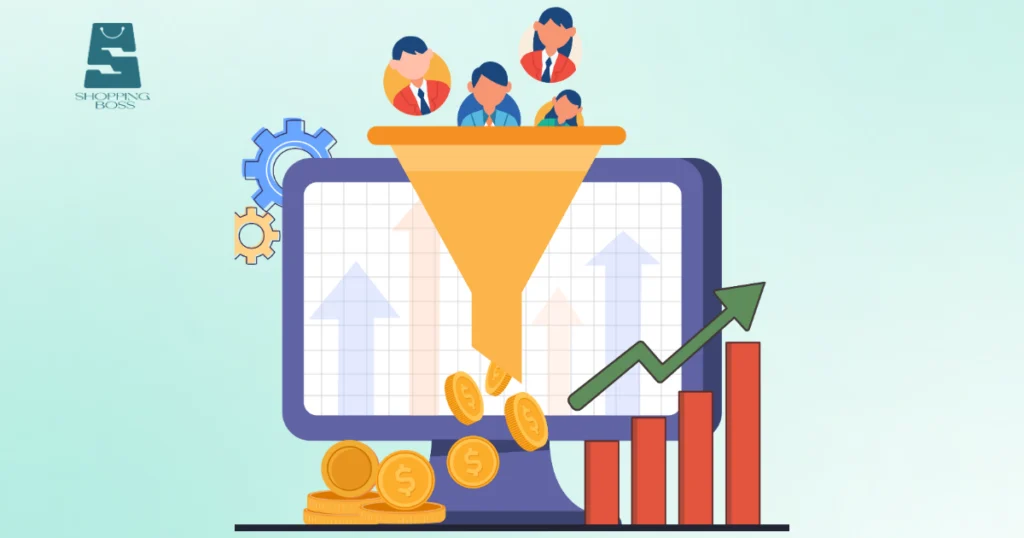
If you’re launching your first online store, understanding how to create a sales funnel is crucial. A sales funnel is the path your customers take from discovering your store to hitting the checkout button. Without one, you’re hoping people will randomly stumble onto your site and buy something.
With a proper funnel, you’re guiding them through a journey that naturally leads to a purchase.
What Is a Sales Funnel?
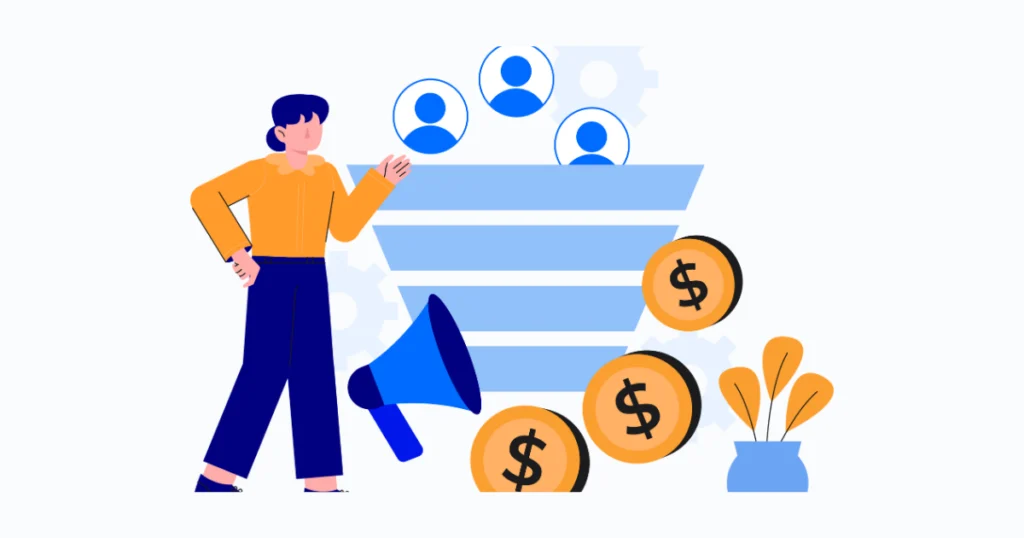
Think of a sales funnel like a real funnel in your kitchen. At the top, you pour in a lot of liquid (potential customers), and as it moves down, it narrows until what comes out at the bottom is exactly what you want (paying customers).
For online stores, a typical sales funnel looks like this:
- Top of funnel: People discover your store
- Middle of funnel: They consider your products
- Bottom of funnel: They make a purchase
The AIDA Framework for Building Sales Funnels
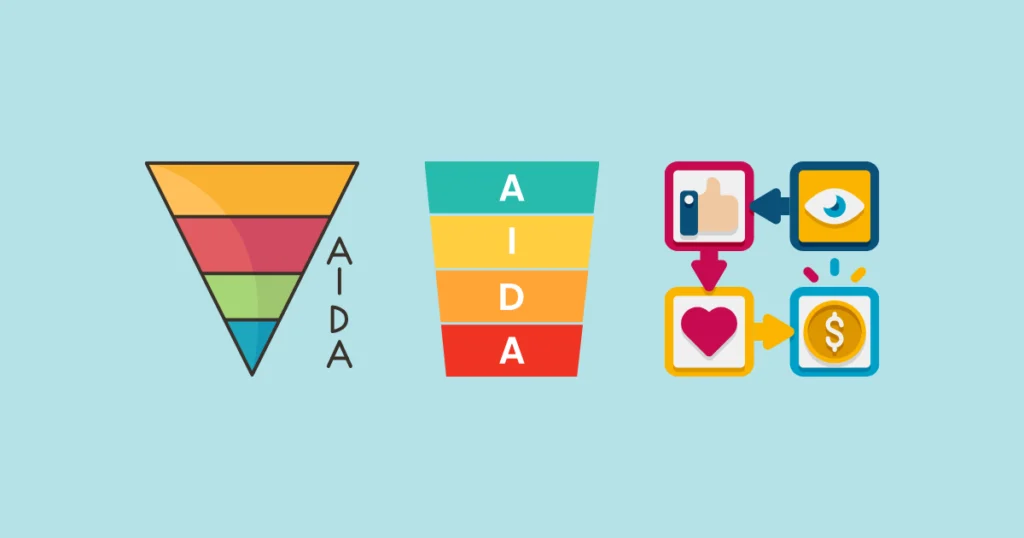
The most effective way to create a sales funnel is using the AIDA model. This framework has been used by marketers for over a century because it matches how people naturally make buying decisions.
AIDA stands for: Awareness, Interest, Desire, and Action.
Awareness: Getting Your Store Discovered
This is where potential customers first learn you exist. Your goal is to show up where they’re looking.
How to build awareness:
- Create helpful content: Write blog posts answering questions your target customers are asking
- Use social media strategically: Share valuable tips, behind-the-scenes content, and product showcases
- Invest in SEO: Optimize your product pages and blog content for search engines
- Run targeted ads: Facebook and Google ads put your store in front of people actively looking for what you sell
- Leverage influencer partnerships: Partner with micro-influencers in your niche
Example: A new skincare brand creates a TikTok video about “Why your skin gets dry in winter” and subtly shows their moisturizer, reaching 50,000 people who didn’t know the brand existed.
The key at this stage is providing value, not pushing sales.
Interest: Making People Want to Learn More
Once someone knows you exist, you need to grab their interest and keep them engaged.
How to generate interest:
- Offer a compelling lead magnet: Give people a reason to share their email—a discount code, free guide, or early access to sales
- Create engaging product content: Use high-quality images, video demonstrations, and detailed product descriptions
- Share customer stories: Testimonials and user-generated content show real people benefiting from your products
- Build an email welcome series: Send automated emails introducing your brand story, bestsellers, and what makes you different
Example: An online coffee store offers “The Ultimate Coffee Brewing Guide” as a free download in exchange for an email address.
Desire: Turning Interest Into “I Need This”
This stage is about showing why your product is the solution they need.
How to create desire:
- Highlight benefits over features: Say “stay dry and comfortable during unexpected rain” instead of just “waterproof jacket”
- Use social proof effectively: Display reviews, ratings, and “X people bought this today” notifications
- Show scarcity and urgency: “Only 3 left” or “Sale ends tonight” (only when true)
- Address concerns: Create an FAQ section answering common questions about shipping, returns, and quality
- Use retargeting ads: Remind people who visited your site what they’re missing
Action: Getting the Purchase Done
Even people who want to buy can abandon their carts if you make this stage too difficult.
How to drive action:
- Simplify checkout: Reduce form fields, offer guest checkout, and show progress indicators
- Provide multiple payment options: Credit cards, PayPal, Apple Pay, and buy-now-pay-later services
- Display trust signals: Security badges, money-back guarantees, and clear return policies
- Eliminate surprise costs: Show shipping fees early—hidden costs are the top reason for cart abandonment
- Send cart abandonment emails: Email within an hour with a gentle reminder
How to Create a Sales Funnel: 6 Practical Steps
Step 1: Define Your Target Customer
Identify your ideal customer’s age, location, income, interests, and the problems your products solve. Figure out where they spend time online and what objections might stop them from buying.
Step 2: Map Out Your Customer Journey
Write down every touchpoint someone might have with your brand from discovery to purchase. List how people discover stores like yours, what information they need at each stage, and where they might drop off.
Step 3: Create Content for Each Funnel Stage
- Awareness content: Blog posts, social media content, videos, ads
- Interest content: Lead magnets, email sequences, product guides
- Desire content: Customer reviews, comparison pages, demo videos
- Action content: Optimized product pages, streamlined checkout, follow-up emails
Start with awareness and interest content, then build out the rest.
Step 4: Set Up Email Marketing Automation
Email lets you nurture relationships over time. Choose an email marketing platform like Klaviyo, Mailchimp, or Constant Contact. Create a welcome email series, set up cart abandonment emails (send within 1 hour, 24 hours, and 3 days), and build post-purchase sequences.
Step 5: Optimize Your Website for Conversions
Add email signup forms on your homepage and blog posts. Create high-quality product pages with multiple images. Simplify your checkout process and test it on mobile devices. Add live chat or chatbot support and display trust badges.
For detailed platform-specific optimization tips, check out Shopinbos’s eCommerce setup guides tailored to beginners.
Step 6: Track, Test, and Improve
Set up Google Analytics to track where people enter and exit your funnel. Monitor conversion rate, cart abandonment rate, and average order value. A/B test elements like headlines and product images. Review funnel performance monthly and make improvements.
Common Mistakes When Building Sales Funnels
Avoid these pitfalls:
- Being too pushy too soon: Build trust before asking for the sale.
- Ignoring mobile users: Over 60% of online shopping happens on mobile.
- Making checkout complicated: Every extra step loses customers.
- Not following up: Most purchases happen after multiple touchpoints.
- Forgetting post-purchase: Repeat customers are your most valuable asset.
Your Sales Funnel Strategy Starts Today
You don’t need a perfect funnel to get started. Begin with the basics—create awareness content, capture emails, and optimize your checkout. You can refine everything else as you grow.
Ready to build your eCommerce business the right way? Shopinbos provides everything first-time online sellers need, from choosing the right platform to creating sales funnels that convert. Visit Shopinbos today for beginner-friendly guides, honest platform reviews, and step-by-step tutorials designed specifically for people starting their first online store.
Your first sale is waiting at the bottom of that funnel. Now you know exactly how to build it.
Frequently Asked Questions
What is the best way to create a sales funnel for beginners?
Start with the AIDA framework: create content that builds awareness, capture emails to generate interest, use social proof to create desire, and simplify checkout to drive action. Begin with one or two tactics at each stage rather than trying to implement everything at once.
How long does it take to build a sales funnel for an online store?
A basic sales funnel can be set up in 2-3 weeks, including email automation, lead magnets, and checkout optimization. However, building an effective sales funnel is ongoing—you’ll continuously test and improve based on customer behavior and data.
Do I need expensive tools to create a sales funnel?
No. You can start with free or low-cost tools: a basic email platform like Mailchimp’s free tier, your eCommerce platform’s built-in analytics, and social media accounts. As you grow and generate revenue, you can invest in more sophisticated tools.
What’s the difference between B2B and B2C sales funnels?
B2C sales funnels are typically shorter with faster decision-making, focusing on emotion and immediate needs. B2B sales funnels are longer with multiple decision-makers, requiring more educational content, demos, and relationship-building before purchase. Both follow the AIDA framework but with different timelines and content approaches.