
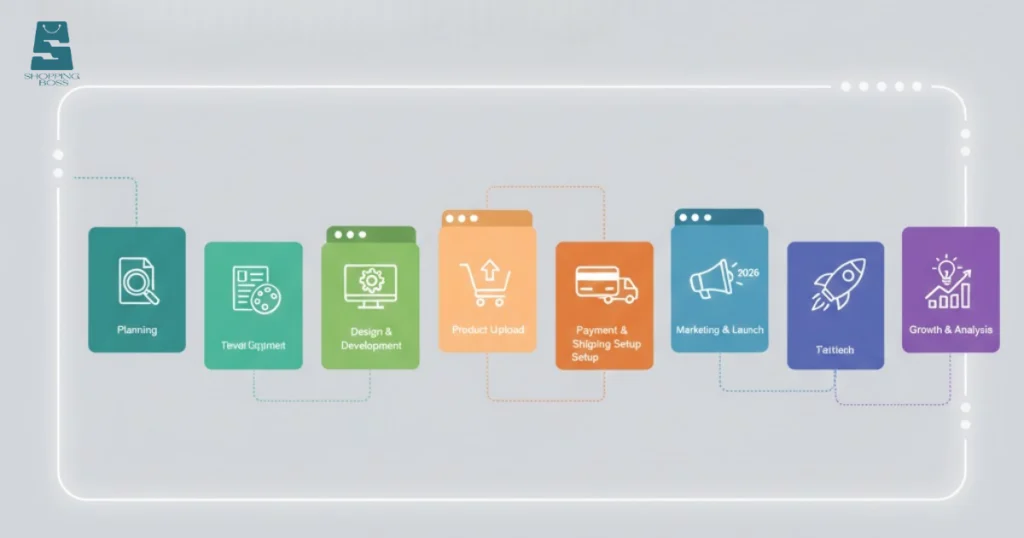
Remember when starting a business meant finding a physical location and hoping customers would find you? Today, you can launch an online store from anywhere and reach customers worldwide. The global ecommerce market is set to reach $9.3 trillion by 2027, creating unprecedented opportunities. Whether you’re selling handmade jewelry or wholesale products, knowing when and how to build an online store transforms your vision into reality.
Two Ways to Build an Online Store
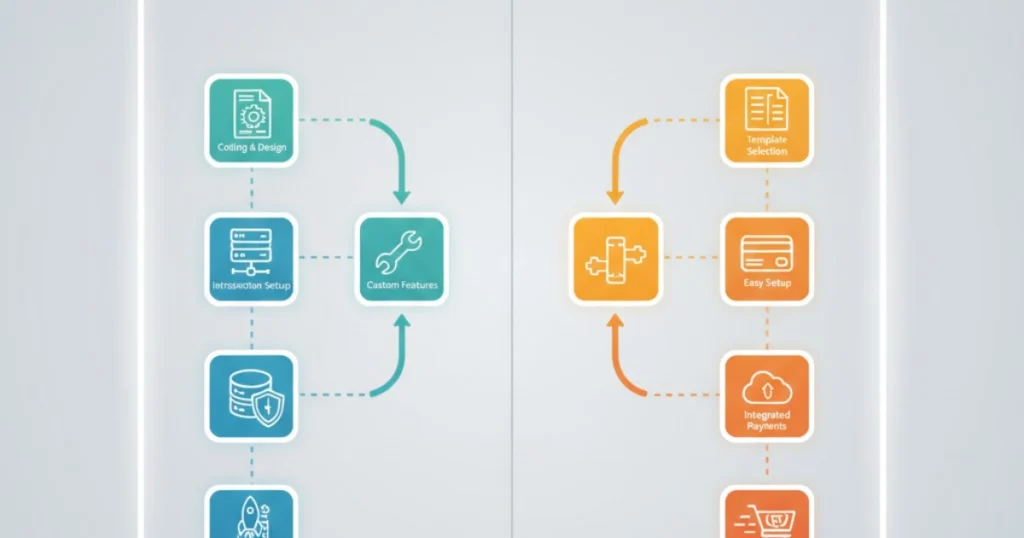
There are different paths to explore when figuring out how to create an ecommerce website.
Using Ecommerce Templates
Ecommerce templates are like furnished apartments where you have everything set-to-go, you only add your touch. Platforms like Shopify, WooCommerce, and Wix online store builders offer pre-designed templates with built-in payment processing and inventory management.
Building a Custom Ecommerce Store
Custom designing your storefront means making a platform uniquely yours through professional design customization. Instead of standard templates, you work with designers to create custom themes, unique layouts, and branded experiences setting you apart from competitors. This approach leverages the platform’s infrastructure for payments and inventory while giving you a distinctive storefront.
10 Steps to Build Your Online Store
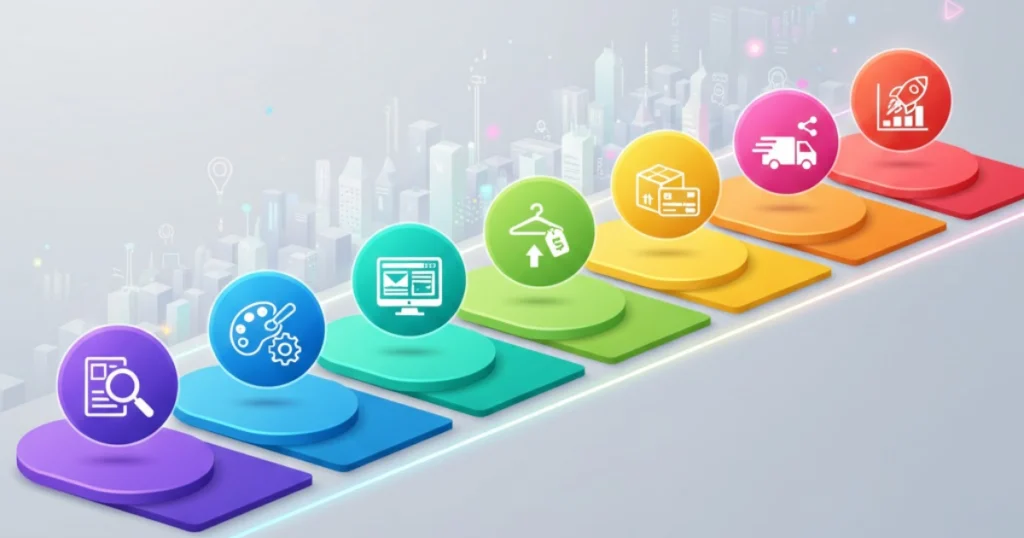
These practical steps guide you from concept to your first sale.
1. Define Your Business Goals
Every business idea needs clarity to drive success that goes beyond simply making money online. So ask yourself: What problem does your product solve? Who needs what you’re selling? Are you building side income or a full-time business? Knowing the answers to these questions gives you measurable targets that shape everything from platform selection to marketing strategies.
2. Conduct Market Research
Understanding your market prevents costly mistakes. Study competitors to identify what works and where opportunities exist. Analyze customer reviews on similar products to learn what people love and hate. Use Google Trends to gauge interest in your category and explore communities where potential customers gather. This research ensures you’re building something people actually want.
3. Plan Your Storefront Structure
Your store needs the type of organization that makes shopping intuitive. Map product categories from your customers’ perspective; would they search by type, price, or use case? Plan your homepage to communicate value immediately, design product pages that answer every question, and create frictionless checkout.
4. Choose an Ecommerce Platform for Your Store
Your platform powers everything, so choose wisely since switching later is expensive. For simplicity with growth potential. Different ecommerce platforms offer different solutions. When choosing an ecommerce platform, there are different aspects to consider such as transaction fees, scalability, integrations, and mobile responsiveness. Your platform should match your specific needs.
5. Design Your Store
Your online store design builds trust and guides visitors toward purchasing. Select colors reflecting your brand, choose readable fonts, and use high-quality images. Since most visitors browse on mobile, design must work across all screen sizes and this must be applied through every design element.
6. Set Up Payment and Shipping Options
Unwanted surprises at checkouts kill sales, so offer multiple payment options including credit cards, PayPal, and Apple Pay. Research shipping carriers that balance cost with reliability and provide options for different customer priorities; those willing to pay for speed and others who do not mind to wait. Be transparent about shipping costs upfront and clearly communicate return policies.
7. Create and Upload Content
Product descriptions and images work 24/7 as your salespeople. Write descriptions painting pictures of how products improve lives rather than just listing features. Include multiple high-quality photos from various angles and videos when possible. Create supporting content like blog posts establishing expertise. This content helps SEO, making discovery through search engines easier.
8. Test and Launch Your Store
Thoroughly test everything before launch to catch problems early. Create a website launch checklist covering broken links, checkout functionality, and mobile responsiveness. Purchase products yourself using different browsers and devices, you can also ask friends for honest feedback about confusing elements. Check loading speed because every second costs potential customers. Launch only when you’re confident that everything works.
9. Market and Promote Your Online Store
Your beautiful store needs to be seen, so develop comprehensive ecommerce marketing strategies including social media, email marketing, content marketing, and potentially paid advertising. Focus on one or two channels where you can excel rather than spreading thin. Marketing is ongoing conversation, not one-time campaigns.
10. Monitor and Optimize
Success requires continuous learning from customer data. Install analytics to track visitor behavior such as sources, pages visited, cart abandonment points, and conversions. Use this to identify bottlenecks and test improvements. Try different descriptions, adjust pricing, experiment with promotions, and refine messages based on what works. This optimization transforms good stores into great ones.
5 Tips for Choosing the Right Ecommerce Platform
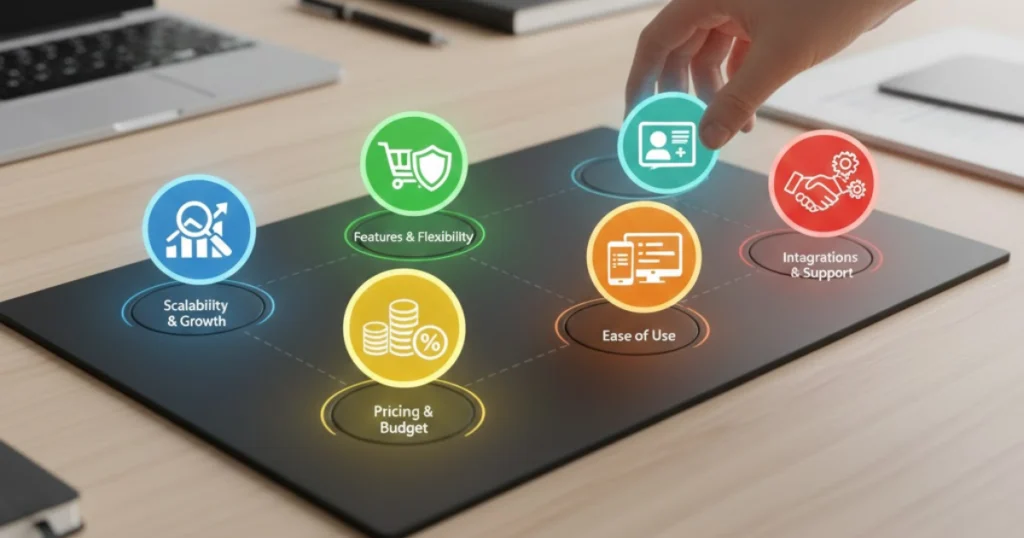
Your platform choice affects everything, so carefully consider these factors when deciding how to build an ecommerce store.
- Ease of Use: Match platforms to your technical level, if coding intimidates you, choose drag-and-drop builders like Shopify or Wix online store builder. With development skills, platforms offering technical control serve you better long-term.
- Scalability: Choose platforms that can grow with you over two to three years while accommodating your needs without compromise. Some work beautifully with 50 products but struggle at 5,000. Ensure your choice manages increasing traffic, expanding catalogs, and multiple sales channels.
- Cost Structure: Look beyond monthly fees to total ownership costs including transaction fees, apps, payment processing, and overage charges. Higher base prices with lower transaction fees sometimes cost less at scale.
- Integration Capabilities: Your platform must work with email marketing, accounting, inventory management, and essential tools. Check for native integrations with services you use because workarounds become exhausting.
- Support and Resources: Quality support matters when problems arise. Research assistance options like 24/7 live chat versus email tickets versus forums. Evaluate documentation, tutorials, and user communities.
How to Build Your Online Store with ShopinBos
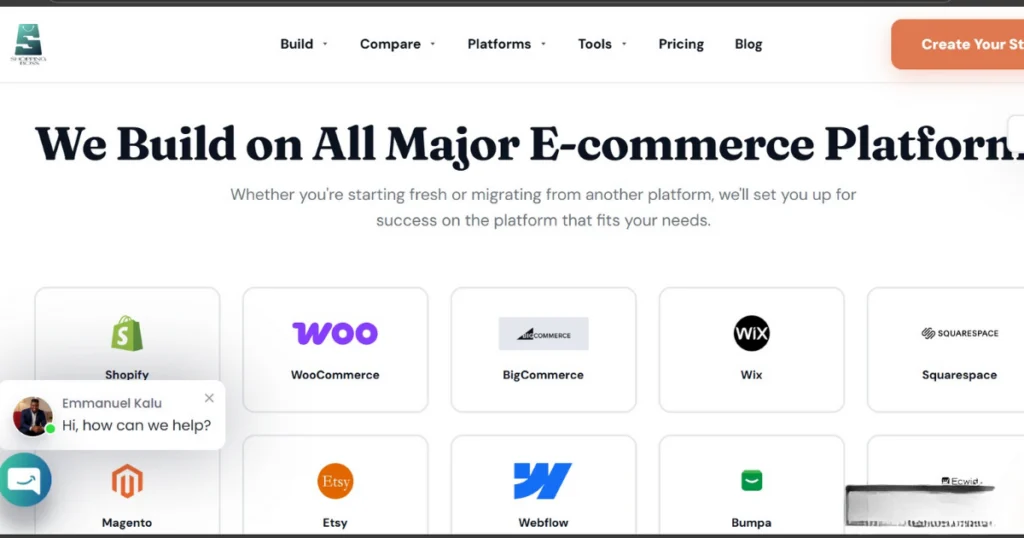
Creating your own online store shouldn’t feel overwhelming. At ShopinBos, we’ve spent years helping entrepreneurs and businesses build ecommerce stores that convert visitors into loyal customers. Our platform combines everything together, from intuitive design tools that make building your own online store straightforward, to robust inventory management that scales with growth, integrated payment processing, and marketing features positioned to reach the right customers.
We’ve designed our platform for professional results without technical backgrounds or massive budgets. Our dedicated support team treats your success as our own. Whether selling handcrafted goods or scaling wholesale operations, Shopinbos provides tools, guidance, and partnership to build an ecommerce store that grows with your ambitions.
FAQs on How to Build an Online Store
You can either use ecommerce templates from platforms like Shopify or Wix for a ready-made solution or build a custom ecommerce store with professional design customization for a unique branded experience that sets you apart from competitors.
Focus on ease of use, scalability to grow with your business, integration capabilities with essential tools like email marketing and accounting software, and the quality of support and resources available when you need help.
Mobile responsiveness is critical since most visitors browse on mobile devices. Your store design must work seamlessly across all screen sizes, from product pages to checkout, to avoid losing potential customers who shop on smartphones and tablets.
You’ll need product descriptions that show how items improve customers’ lives, multiple high-quality photos from various angles, videos when possible, and supporting content like blog posts to establish expertise and improve SEO for better search engine visibility.
No, ecommerce platforms like Shopify, and Wix use drag-and-drop interfaces while ecommerce enablement platforms like ShopinBos have esports that take the workload of doing it yourself off your hand, ultimately making online store creation easy.